Still at Your Desk with a Fever? Here's When to Step Outside and Get Checked

Still at Your Desk with a Fever? Here's When to Step Outside and Get Checked
You've been there. It's 10 a.m., you've got back-to-back meetings, a deadline looming, and your head feels like it's stuffed with wet cement. So you do what most American workers do: you grab another cup of coffee, mute your symptoms, and power through.
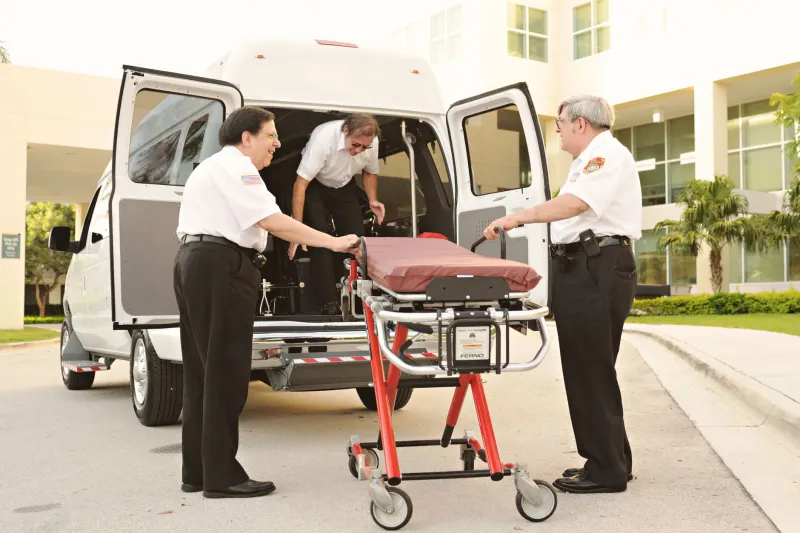
Sometimes that works. Sometimes you go home, sleep it off, and feel fine by Thursday. But sometimes — more often than we like to admit — that decision to ignore what your body is telling you turns a two-day bug into a two-week ordeal. And now that mobile care clinics are literally parking outside office buildings and urban work hubs, the biggest excuse for skipping medical attention during the workday has basically evaporated.
So how do you know when it's worth stepping outside for a quick curbside check-in versus riding it out at your desk? Let's break it down.
The 'Tough It Out' Trap Is Real — and Costly
American workplace culture has a complicated relationship with sick days. A 2023 survey from the American Staffing Association found that nearly 90% of workers admitted to going to work while sick at least once in the past year. The reasons are predictable: too much on their plate, fear of falling behind, or simply not wanting to deal with the hassle of scheduling a doctor's appointment.
 Photo: American Staffing Association, via assets.editorial.aetnd.com
That last one is where things get interesting. Traditional urgent care means driving somewhere, finding parking, sitting in a waiting room for an hour, and then trying to squeeze back into your workday. For a lot of people, that math just doesn't work — so they skip it entirely.
But here's the thing: untreated infections get worse. Minor issues become major ones. And that person sneezing into their keyboard all day? They're quietly infecting everyone around them.
Common Workplace Ailments That Deserve Attention Sooner Than You Think
Sinus Infections
That pressure behind your eyes and the thick, discolored mucus you've been dealing with for five days? It's probably not just allergies anymore. Bacterial sinus infections won't resolve on their own — they need antibiotics, and the longer you wait, the more miserable you'll be. A quick stop at a mobile clinic can get you a diagnosis and a prescription in about the time it takes to eat lunch.
Urinary Tract Infections
UTIs are wildly common, especially among women, and they have a nasty habit of striking at the worst possible moments. The burning, the urgency, the general misery of trying to concentrate during a Zoom call — none of that is something you should white-knuckle through. Left untreated, a UTI can spread to your kidneys, turning a simple fix into a serious problem. A curbside care provider can test for it on the spot and have you on antibiotics before your afternoon coffee.
Ear Infections
Adults get them too, and they're brutal. If you're dealing with sharp ear pain, muffled hearing, or that full, pressurized feeling that won't quit, there's not a lot of toughing-it-out to be done here. An ear infection typically needs medical treatment, and the sooner you get it, the sooner you can actually hear your coworkers again.
Minor Cuts, Sprains, and Injuries
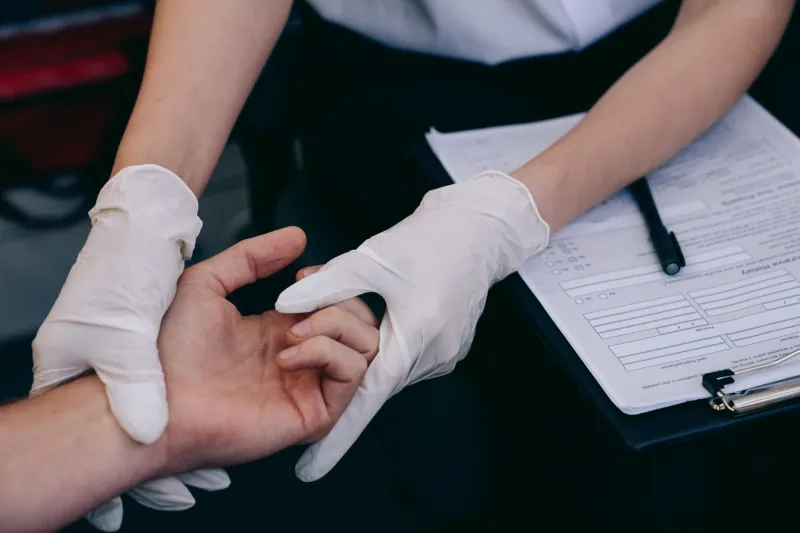
City life and busy workdays come with physical hazards — a slip on a wet floor, a door that closed faster than expected, an awkward stumble during a morning commute. Minor injuries that don't seem ER-worthy often get ignored entirely. But a cut that needs a stitch or two, a sprain that might actually be a small fracture, or a wound that's showing early signs of infection — those all benefit from a quick professional look. Mobile clinics are well-equipped to handle exactly this kind of thing.
Strep Throat
A scratchy throat is easy to dismiss. But if it's getting progressively worse, swallowing feels like broken glass, and you've got a fever, you could be dealing with strep. It's highly contagious and it doesn't go away without antibiotics. A rapid strep test takes minutes, and treatment works fast. Don't sit in an open-plan office spreading that around all day.
The Tipping Point: When 'I'll Be Fine' Becomes 'I Really Should Get That Checked'
There's no universal answer, but a few signs consistently signal that you've crossed from 'manageable' into 'needs attention':
- A fever over 100.4°F — especially if it's been present for more than 24 hours
- Symptoms that are getting worse, not better, after two or three days
- Pain that's interfering with your ability to function — not just uncomfortable, but actually limiting
- Symptoms that have shifted — like a cold that's now settled into your chest, or a headache that's become one-sided and severe
- Visible signs of infection — redness spreading around a wound, swelling, pus, or warmth
If any of these apply, the calculus changes. You're no longer in 'rest and fluids' territory. You need someone to take a look.
Why Curbside Care Changes the Equation
The whole reason people skip medical care during the workday is friction. Getting seen by a doctor traditionally requires planning, travel, waiting, and a significant chunk of your schedule. Mobile urgent care eliminates most of that.
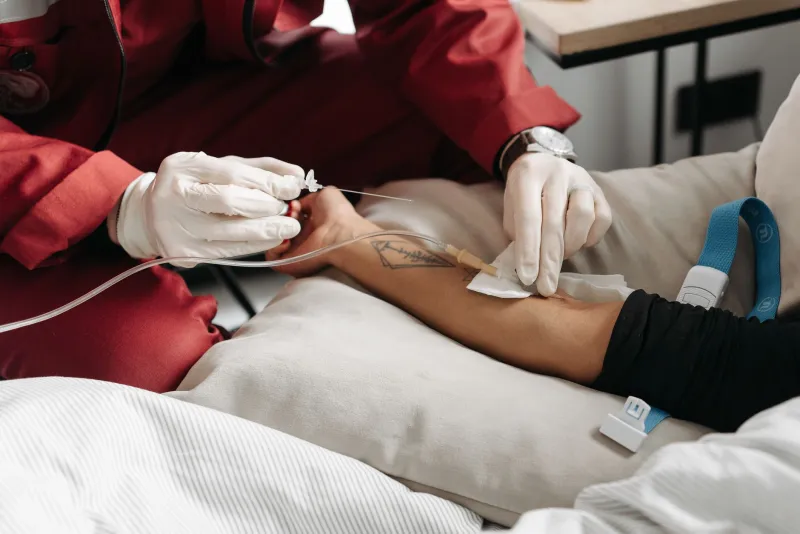
A well-equipped mobile clinic can handle diagnostic testing, prescriptions, wound care, and basic imaging — all without you leaving your neighborhood or your block. For urban professionals who work in dense areas, that can mean a 30-minute round trip instead of a half-day ordeal. That's a genuinely different proposition.
It also removes the guilt factor. When getting care is as simple as stepping outside during a lunch break, it's a lot harder to justify skipping it. And when you catch something early — before it's had four days to dig in — you recover faster, miss fewer days, and avoid dragging your whole office down with you.
A Note on Knowing Your Limits
Mobile urgent care is excellent for a wide range of everyday illnesses and minor injuries, but it's not a replacement for emergency services. Chest pain, difficulty breathing, signs of a stroke, severe allergic reactions — those go straight to the ER, full stop. If something feels genuinely alarming, don't wait for a van to pull up. Call 911.
For everything else on the spectrum between 'probably fine' and 'definitely the ER,' curbside care sits in a really useful middle ground.
The Bottom Line
Pushing through illness is sometimes necessary. Life doesn't always pause for a head cold. But there's a real difference between managing mild symptoms and ignoring something that's trying to tell you it needs treatment.
The next time you're sitting at your desk, running a low-grade fever, and convincing yourself you'll feel better tomorrow — take a second to honestly assess what's going on. If the answer is 'this has been getting worse for three days and it's starting to affect my work,' that's your sign.
Step outside. Get checked. Get back to your day faster than you would have if you'd waited another week to do something about it.