Your Mobile Clinic Can Handle That? 7 Conditions That'll Surprise You
Your Mobile Clinic Can Handle That? 7 Conditions That'll Surprise You
When most people hear "mobile clinic," they picture a nurse practitioner with a thermometer and a box of rapid tests. And sure, cold and flu season is absolutely in the wheelhouse. But if that's all you think curbside care can do, you're selling the model short — by a lot.
Modern mobile and curbside clinics are equipped with a surprising amount of diagnostic and treatment capability. Clinicians bring portable labs, wound care kits, IV equipment, and more directly to patients. Below are seven conditions that mobile care handles more often than you'd expect — along with what providers actually bring to the visit, and the important caveat of when you should still head straight to the ER.
1. Wound Care and Minor Laceration Repair
What it is: Cuts, abrasions, puncture wounds, and minor lacerations that need professional cleaning, closure, or dressing.
How it works on-site: Mobile clinicians typically carry wound irrigation supplies, sterile dressing kits, skin staples, wound closure strips (like Steri-Strips), and in some cases, suturing equipment and local anesthetic. A provider can assess the wound, clean it thoroughly, determine the best closure method, and apply a proper dressing — all at your location.
When to go to the ER instead: Deep wounds with uncontrolled bleeding, injuries involving tendons or bone, animal bites with significant tissue damage, or any wound near the eye or face that might require a specialist's attention. If there's any question about nerve or vascular involvement, an emergency department is the right call.
2. IV Hydration Therapy
What it is: Intravenous fluid replacement for dehydration caused by illness, intense physical activity, heat exposure, or a rough night out.
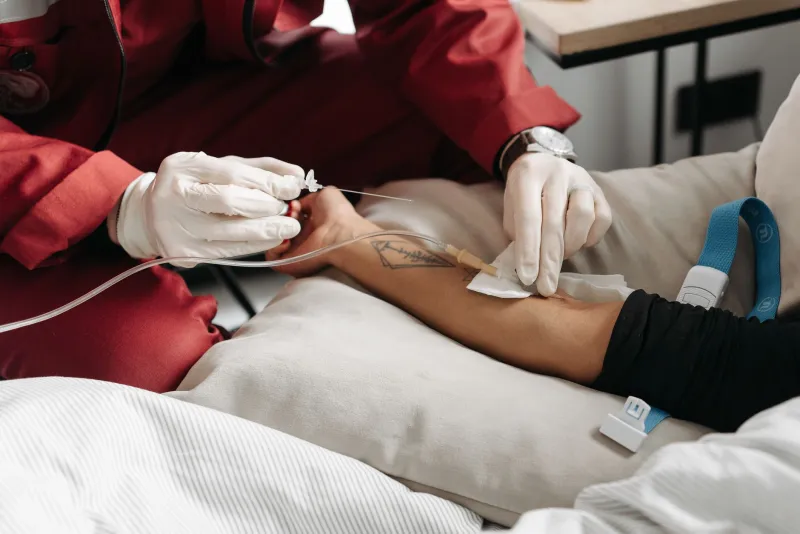
How it works on-site: This is one of the more logistically smooth mobile services. Clinicians bring pre-packaged IV bags (typically saline or lactated Ringer's solution), IV start kits, and sometimes add-ins like electrolytes, B vitamins, or anti-nausea medication depending on what's indicated. The whole process usually takes 30–60 minutes and can happen in your living room, office, or even a hotel room.
When to go to the ER instead: Severe dehydration with confusion, rapid heart rate, or inability to keep any fluids down at all — these are signs of a more serious condition that needs emergency evaluation. IV hydration at home is great for recovery; it's not a substitute for emergency care when someone is critically ill.
3. STI Testing and Treatment
What it is: Screening and, in many cases, same-visit treatment for common sexually transmitted infections including chlamydia, gonorrhea, syphilis, and herpes.
How it works on-site: Mobile providers bring specimen collection supplies — urine cups, swabs, blood draw equipment — and can either process rapid tests on-site or send samples to a partner lab with results typically available within 24–72 hours. When treatment is indicated and appropriate (like a course of antibiotics for chlamydia), a prescription can often be sent to your pharmacy the same day. The privacy factor here is significant for a lot of patients.
When to go to the ER instead: Symptoms suggesting pelvic inflammatory disease (severe pelvic pain, fever, nausea), or any situation where you think you may have been exposed to HIV and need post-exposure prophylaxis (PEP) — that requires immediate attention at an ER or sexual health clinic.
4. Sports Injuries and Musculoskeletal Assessment
What it is: Evaluation of sprains, strains, joint pain, and soft tissue injuries from athletic activity or everyday accidents.
How it works on-site: Clinicians conduct a physical exam, assess range of motion and stability, and can apply bracing or compression wraps on the spot. Some mobile providers carry portable ultrasound devices capable of imaging soft tissue injuries in real time. They can also prescribe anti-inflammatory medications and refer for X-ray or MRI if needed.
When to go to the ER instead: Suspected fractures (especially if there's obvious deformity, the inability to bear weight, or significant swelling), dislocations, or any injury with neurovascular compromise — numbness, tingling, or loss of circulation distal to the injury.
5. Urinary Tract Infections (UTIs)
What it is: Bacterial infections of the bladder or urinary tract — extremely common, especially in women, and miserable to deal with untreated.
How it works on-site: A simple urine dipstick test or urinalysis can be performed on the spot. Most mobile providers carry these supplies routinely. If the results support a UTI diagnosis and there are no complicating factors, a prescription for antibiotics can be issued the same visit — often sent electronically to your nearest pharmacy within minutes.
When to go to the ER instead: Signs of a kidney infection — fever above 101°F, back or flank pain, nausea and vomiting — indicate the infection may have spread and requires more aggressive treatment than a standard course of oral antibiotics.
6. Allergic Reactions (Mild to Moderate)
What it is: Localized or systemic allergic responses to food, insect stings, medications, or environmental triggers.
How it works on-site: Mobile clinicians can assess the severity of a reaction, administer oral antihistamines, and in appropriate cases, give an epinephrine injection or intramuscular diphenhydramine (Benadryl). They carry the equipment to monitor vitals and track whether symptoms are improving or escalating.
When to go to the ER instead: Any sign of anaphylaxis — throat tightening, difficulty breathing, swelling of the lips or tongue, a sudden drop in blood pressure, or loss of consciousness. This is a life-threatening emergency. Call 911 immediately. Do not wait for a mobile provider.
7. Blood Pressure Checks and Medication Management for Chronic Conditions
What it is: Monitoring and short-term management of conditions like hypertension or diabetes, particularly for patients who need a quick check-in between primary care appointments.
How it works on-site: Clinicians bring portable blood pressure cuffs, glucometers, and pulse oximeters. They can review current medication regimens, check in on symptom management, and in some cases, adjust dosages or issue bridge prescriptions when a patient's regular provider isn't immediately available. This is especially useful for patients who've recently been discharged from a hospital and need close follow-up.
When to go to the ER instead: A hypertensive crisis — blood pressure readings above 180/120 mmHg accompanied by symptoms like chest pain, severe headache, or vision changes — requires emergency evaluation. Same goes for blood sugar levels that are dangerously high or low and not responding to standard interventions.
The Bottom Line
Mobile and curbside care isn't just for sniffles and sore throats. The scope of what today's on-demand clinicians can handle is broad, practical, and expanding. That said, knowing the limits is just as important as knowing the capabilities. A good mobile provider will always be upfront about when a situation is beyond their scope — and will help you get to the right level of care fast.
When in doubt, always err on the side of caution. But for a wide range of everyday medical issues? The clinic coming to you isn't just convenient — it might just be the smartest choice you make all week.