We Need to Stop Bragging About Pushing Through It — Our Health Is Paying the Price

There's a particular kind of American pride that lives in the phrase "I just pushed through it."
You've heard it — maybe you've said it. The coworker who came in with a 102-degree fever because they couldn't afford to fall behind. The dad who ignored that chest tightness for three weeks because who has time for a doctor's appointment. The college student who chalked up a UTI to stress and drank more water until she ended up in the emergency room with a kidney infection.
We don't just tolerate this behavior in America — we quietly celebrate it. And it is costing us, individually and collectively, in ways that are hard to fully quantify but impossible to ignore.
The Statistics Behind the Stubbornness
This isn't a vibe — it's a documented pattern. According to a 2023 Gallup survey, 38% of Americans reported that they or a family member had delayed seeking medical care in the past year due to cost. A separate analysis from the Commonwealth Fund found that the United States consistently ranks last or near-last among high-income nations on measures of timely access to care — even when cost is removed from the equation.
The Centers for Disease Control and Prevention (CDC) has noted that delayed care for conditions like hypertension, diabetes, and even certain cancers dramatically worsens outcomes and drives up long-term treatment costs. In other words, pushing through it doesn't just affect how you feel today — it shapes what your health looks like five and ten years from now.
And here's the part that doesn't get said enough: this isn't primarily a willpower problem. It's an access problem dressed up as a character flaw.
When "Inconvenience" Is the Real Diagnosis
Talk to almost any American who has delayed a medical visit and the reasons start to sound remarkably similar. It's not usually fear of the diagnosis (though that's real too). It's the logistics. The appointment availability. The time off work. The parking. The waiting. The copay that might show up three weeks later as a surprise bill.
For urban residents especially, the friction of traditional healthcare is relentless. In cities like New York, LA, and Chicago, getting to a clinic can mean navigating public transit, arranging childcare, taking unpaid time off, and spending the better part of a day on something that — if it had been easier — could have been handled in 30 minutes.
 Photo: New York, via images.alphacoders.com
"I knew something was off for weeks," said one Chicago-based marketing manager who eventually used a mobile care service after putting off treatment for a respiratory infection. "But between client deadlines and my kids' schedules, I just kept telling myself it would pass. It didn't. It got worse. And honestly, the only reason I finally got seen was because someone came to me."
That last sentence is the crux of everything.
The Myth of the Responsible Patient
The American healthcare system has, for decades, operated on an implicit assumption: that the patient is responsible for navigating toward care. You make the appointment. You get yourself there. You manage the paperwork. You follow up. The burden of access has traditionally fallen almost entirely on the person who is already sick, stressed, or stretched thin.
This model made a certain kind of sense when medicine was simpler and communities were smaller. It makes very little sense in 2024, when the average American is juggling work, caregiving, financial pressure, and an increasingly fragmented healthcare landscape.
The "just push through it" mentality didn't emerge in a vacuum. It's a rational adaptation to a system that makes care genuinely difficult to access. When getting help is hard, avoiding help feels like the path of least resistance. We've just started calling that avoidance resilience — which is a pretty damaging reframe.
Curbside Care as a Cultural Corrective
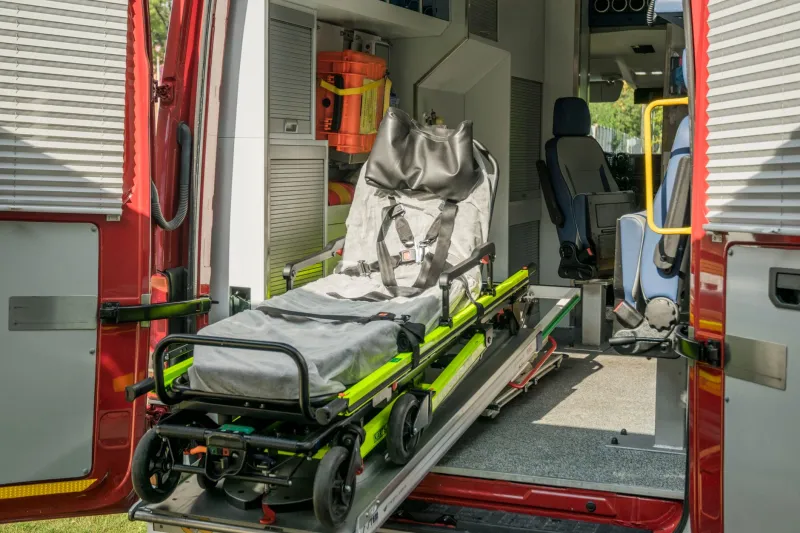
This is where the mobile and curbside care model does something that goes beyond logistics. It doesn't just make healthcare more convenient — it fundamentally reframes the relationship between patient and provider.
When care comes to you, the message is simple: your time and your health both matter. You don't have to earn the right to see a clinician by rearranging your entire day. You don't have to choose between your job and your wellbeing. The system — or at least this part of it — is working for you, not the other way around.
For communities that have historically faced the steepest access barriers, this shift is especially meaningful. Mobile clinics operating in underserved urban neighborhoods aren't just offering convenience — they're offering something closer to dignity. The ability to receive care without losing a day's wages or navigating three buses to get to a clinic that might have a two-hour wait is not a luxury. It's a baseline that the healthcare system has failed to provide for too long.
"I hadn't seen a doctor in almost four years," shared one patient served by a mobile health unit in Philadelphia. "Not because I didn't want to. Because every time I thought about it, the whole process felt impossible. When they pulled up outside my building, I thought — okay, I can do this."
That moment of I can do this is what accessible care creates. And it's something the traditional model has been leaving on the table.
Accessibility Is the Prescription
The public health argument for reducing care barriers is well-established: earlier intervention saves lives and money. Treating a sinus infection before it becomes a hospitalization. Catching elevated blood pressure before it becomes a stroke. Addressing a mental health concern before it becomes a crisis. None of this is controversial in medical circles. The controversy — or at least the challenge — has always been in the implementation.
Mobile and curbside care isn't a silver bullet. It doesn't solve insurance gaps, it doesn't replace the need for comprehensive primary care relationships, and it doesn't address every structural inequity in the American health system. But it does one thing remarkably well: it removes the friction that causes people to delay or skip care entirely.
And in a country where that friction has become a genuine public health threat, removing it is no small thing.
Time to Retire the Badge
We should probably stop giving out points for pushing through it. The employee who came in sick and infected the whole office wasn't being a team player — they were navigating a system that offered them no good options. The parent who ignored symptoms until a minor issue became a major one wasn't being strong — they were being failed by a model of care that demanded too much and offered too little.
Convenient, accessible healthcare isn't coddling. It's just good sense. It's what happens when the system finally acknowledges that sick people shouldn't have to run an obstacle course to get better.
The clinic is at the curb. You don't have to push through anything.