The Waiting Room Never Worked for Us — Mobile Clinics Are Finally Proving It
Here's a question worth sitting with for a second: When was the last time you genuinely looked forward to a doctor's appointment?
Not the outcome — not the reassurance, the prescription, the peace of mind. The actual experience of getting there. The scheduling, the commute, the clipboard full of forms you've filled out four times before, the plastic chair, the 40-minute wait past your appointment time, the parking garage that costs $22 and only accepts exact change.
If your answer is "never," you're in very good company. And if you've ever skipped a routine visit because the logistics felt like too much — also not alone. According to a 2023 survey from the Kaiser Family Foundation, roughly 38% of American adults said they'd forgone care in the past year due to cost. But buried in that same data, and in dozens of similar studies, is a quieter finding that doesn't make as many headlines: a significant chunk of people who could afford care still didn't get it. Not because of money. Because of time, hassle, and the sheer friction of the whole thing.
That's the story mobile clinics are telling us. And it's one American medicine has been slow to hear.
Friction Is a Public Health Problem
In urban planning, there's a concept called "desire paths" — those unofficial trails that form in parks and on campuses when people consistently cut across the grass instead of using the designated sidewalk. They're not vandalism. They're data. They show you where people actually want to go, versus where the designers assumed they'd go.
Mobile and curbside care is healthcare's desire path.
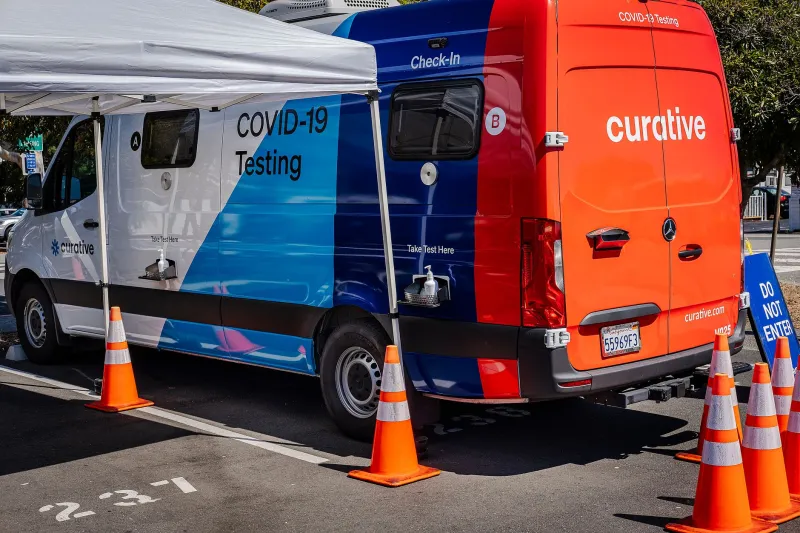
When a clinic van parks outside a grocery store on a Saturday morning and books up within the hour, that's not a fluke. That's people voting with their feet — or more precisely, with the absence of a detour. The care came to them. They didn't have to rearrange their day, find a babysitter, or burn a half-day of PTO. They just walked over between the produce aisle and the parking lot.
Behavioral economists have a term for what's happening here: reducing "friction costs." These are the hidden, non-monetary barriers that shape our decisions just as powerfully as price tags do. For healthcare, friction costs are enormous and almost entirely invisible in policy conversations. We talk endlessly about insurance coverage and drug pricing. We talk almost never about the fact that the average wait time for a new patient appointment with a primary care physician in a major US city is over three weeks — and that's before you factor in the two hours of your workday it'll consume.
Convenience-first models don't just make care easier. They remove the tax that the traditional system quietly levied on anyone who wasn't retired, independently wealthy, or extremely determined.
What the Demand Is Actually Telling Us
The explosive growth of mobile urgent care over the past several years isn't a pandemic blip. Telehealth visits surged during COVID, yes — but the continued expansion of physical mobile units into neighborhoods, corporate campuses, transit hubs, and community events tells a more durable story. People aren't just tolerating this model. They're actively preferring it.
And the demographics are instructive. Early adopters of mobile care skewed heavily toward working-age adults in dense urban areas — people who, on paper, had access to plenty of traditional healthcare options. These weren't patients who lacked nearby clinics. They were patients who lacked the bandwidth to use them on the clinic's terms.
There's a psychological dimension here too. Research on what's called "healthcare avoidance behavior" consistently finds that anticipatory stress — the dread of the whole ordeal before it even begins — is a meaningful predictor of whether someone seeks care at all. When you strip out the waiting room, the parking garage, and the three-week lead time, you also strip out a significant portion of that dread. The visit stops feeling like an event and starts feeling like an errand. That shift in mental framing is not trivial. It's the difference between "I should really get that looked at" staying a thought forever and actually becoming an action.
The Parking Lot as Diagnostic Tool
There's something almost poetic about the fact that the most honest feedback American healthcare has received in years is coming from a converted van in a strip mall parking lot.
Traditional healthcare systems have long operated on a kind of implicit assumption: that patients will accommodate whatever access model the system prefers, because the alternative is going without care. For many conditions, that calculus held. But for the vast middle ground of healthcare — the strep tests, the blood pressure checks, the UTI screenings, the flu shots, the minor injuries that aren't emergencies but aren't nothing — patients have been quietly opting out for decades. Not because they didn't want care. Because the system made getting it feel harder than it was worth.
Mobile clinics are surfacing that pent-up demand in real time. Every fully booked appointment slot at a curbside unit is a data point. Every patient who says "I've been meaning to get this checked for months" is a confession the traditional model should be taking seriously.
This isn't an indictment of the clinicians and staff inside traditional healthcare settings — most of whom are working incredibly hard under genuinely difficult conditions. It's an indictment of a structural design that was never really built around the patient's actual life.
Convenience Isn't a Shortcut — It's a Correction
Critics of convenience-first healthcare sometimes frame it as a trade-off: you're getting speed and ease at the cost of depth, continuity, or quality. And that concern deserves some air. Mobile urgent care isn't a replacement for a longitudinal relationship with a primary care physician. It isn't equipped for complex chronic disease management or specialist-level care.
But here's the thing: for millions of Americans, the choice was never between a mobile clinic and a robust primary care relationship. It was between a mobile clinic and nothing. Between a curbside visit and the kind of low-grade medical neglect that turns a manageable problem into a serious one.
In that context, calling convenience-first care a shortcut misses the point entirely. It's not a shortcut. It's a correction. It's the system finally bending toward the shape of people's actual lives instead of demanding that people bend toward the shape of the system.
What Comes Next
The most interesting question mobile clinics raise isn't logistical. It's philosophical. If we can build healthcare that people actually use — that fits into a Tuesday afternoon instead of requiring one — what does that tell us about how we should be redesigning everything else?
The parking lot isn't the end point. It's the proof of concept. It's evidence that when you meet people where they are, geographically and logistically, they show up. They get the flu shot. They catch the blood pressure reading before it becomes a crisis. They treat the infection before it lands them in the ER.
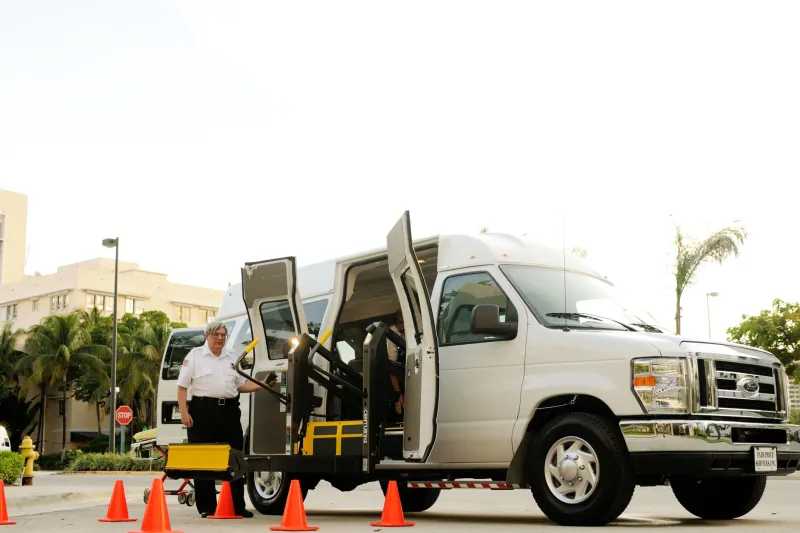
America doesn't have a healthcare engagement problem. It has a healthcare access design problem. And the van parked outside your office building, your farmer's market, your kid's school — that's not a novelty. That's a blueprint.