America's Most Hated Room Has Finally Met Its Match
America's Most Hated Room Has Finally Met Its Match
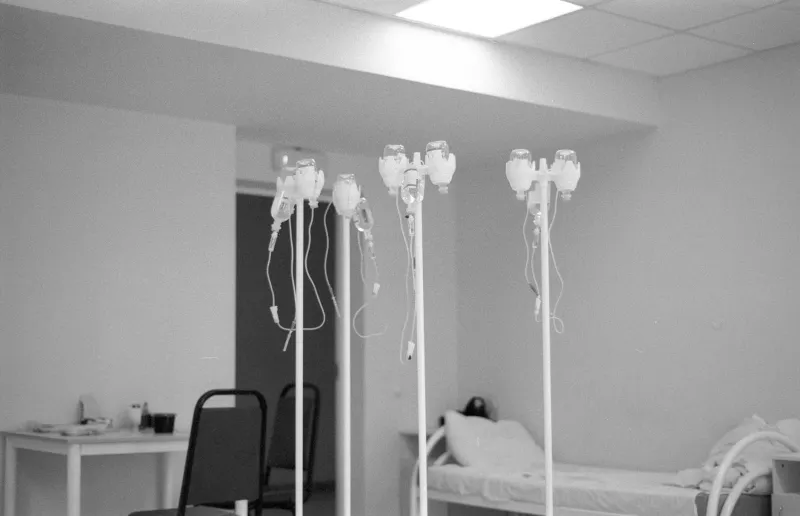
There's a specific kind of misery that lives in a waiting room. It's not dramatic. Nobody's in crisis (usually). It's just a slow, grinding experience that manages to be simultaneously boring and stressful — a combination that should be impossible but somehow isn't. You pick up a magazine from 2019. You watch a daytime talk show on a mounted TV that nobody asked for. You wonder if the person three seats down is contagious. You check your phone. You check it again.
And then you wait some more.
For decades, this experience has been the price of entry for American healthcare. You wanted to see a doctor? You sat in that room first. It was just how things worked. But somewhere along the way — between the rising co-pays and the two-hour waits for a sinus infection — patients started asking a pretty reasonable question: why does it have to be this way?
The Numbers Are Hard to Ignore
If it feels like you spend a significant chunk of your life in waiting rooms, you're not imagining it. According to data from the American Medical Association and various patient experience surveys, the average wait time to see a physician in the US — from the moment you walk in to when a provider actually walks into your exam room — hovers somewhere between 18 and 24 minutes in better-performing practices. In emergency departments, that number balloons to over two hours on average, and in some urban hospitals, waits of four or five hours aren't unusual for non-critical cases.
And that's just the clock time. What the data doesn't fully capture is the cognitive load of waiting — the rescheduling, the childcare arrangements, the half-day of PTO burned just to sit under fluorescent lights and fill out a clipboard that asks you the same questions you answered at your last visit.
A 2023 survey from Zocdoc found that nearly 30% of Americans have delayed or skipped medical care entirely because they didn't want to deal with the logistics of getting an appointment. That's not laziness. That's a system that has made the act of getting healthcare feel like a punishment.
What the Waiting Room Actually Represents
Here's the thing about waiting rooms that rarely gets said out loud: they aren't just inconvenient. They're a power dynamic made physical.
When you walk into a traditional clinic, you are immediately on someone else's schedule. You signed up for their time slot, you drove to their location, you sat in their chairs, and you waited until they were ready for you. The entire architecture of the experience communicates, pretty clearly, that your time is less valuable than the institution's.
For most of American healthcare history, patients accepted this because they had to. There wasn't an alternative. You needed the doctor more than the doctor needed you, and the system was built to reflect that.
But that framing is starting to crack. And mobile urgent care is one of the things cracking it.
Care That Works Around You — Not the Other Way Around
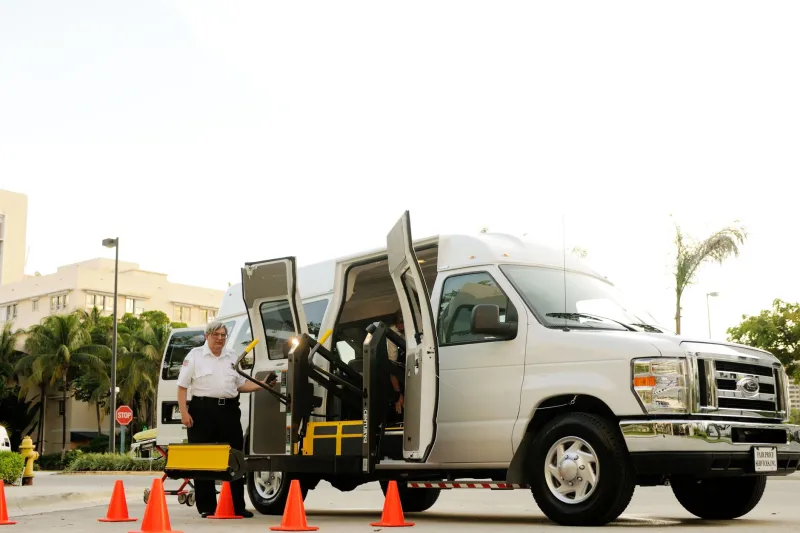
The model is pretty simple, even if it still feels a little surreal the first time you experience it: instead of you going to the clinic, the clinic comes to you. A fully equipped medical van or mobile unit parks nearby — outside your office, down the street from your apartment, at a location you can actually walk to on your lunch break — and you step in when you're ready.
There's no waiting room because there's no room to wait in. There's a provider, there's equipment, and there's you. The visit is efficient not because corners are being cut, but because the entire logistical overhead of a traditional clinic visit — the check-in desk, the triage queue, the exam room shuffle — has been stripped away.
Patients who've made the switch often describe it less as a medical upgrade and more as a psychological one. The anxiety that typically accompanies a clinic visit — the anticipation of the wait, the uncertainty of the timeline — just isn't there in the same way. You know when you're going. You know roughly how long it'll take. You leave and go back to your day.
It's Not Just About Speed
It would be easy to frame this as purely a convenience story — mobile care is faster, therefore people like it. But that misses something important about why the waiting room became such a loaded symbol in the first place.
For a lot of Americans, especially those in lower-income brackets or without flexible work schedules, the waiting room isn't just annoying. It's a genuine barrier. Hourly workers can't always afford to burn three hours at a clinic. Parents of young kids can't always arrange coverage for a long, unpredictable appointment. People who rely on public transit can't always make a trip across town work on short notice.
Mobile urgent care, when it's deployed thoughtfully — parked in neighborhoods that need it, operating during hours that fit real people's schedules — doesn't just make healthcare more convenient. It makes it more equitable. The waiting room, for all its mundane familiarity, was never a neutral space. It cost people something to be there. Time. Money. Energy. Opportunity.
Removing it isn't just a customer experience improvement. It's a structural one.
The Psychological Weight We Stopped Noticing
Something interesting happens when you eliminate waiting from a medical visit: people report feeling less anxious about the appointment itself. That sounds almost too simple, but it tracks with what we know about anticipatory stress — the dread that builds in the waiting room often colors the entire experience of the visit, even when the actual clinical encounter goes fine.
When the gap between "I need care" and "I'm receiving care" shrinks to almost nothing, patients show up differently. They're less guarded. They're more communicative. The interaction feels less like an ordeal and more like — and this is a phrase you don't hear often in healthcare — a normal errand.
That shift matters. Better patient-provider communication leads to better outcomes. It's not a soft benefit; it's a clinical one.
So What Are We Actually Saying Goodbye To?
Here's a fair question: is anything lost when we leave the waiting room behind?
Maybe a little. There's something to be said for a dedicated space that signals "this is where healthcare happens" — a physical environment that helps people mentally transition into patient mode. And for certain kinds of visits, that context still matters. Waiting rooms will stick around in hospitals, in specialty practices, in places where the complexity of care requires them.
But for the routine stuff — the sinus infections, the sprained ankles, the UTIs, the blood pressure checks — the waiting room was never adding value. It was just adding time.
And time, it turns out, was the one thing nobody had to spare.
The room that defined the American healthcare experience for generations isn't disappearing overnight. But its grip is loosening. And honestly? Nobody's going to miss it.