Somewhere Between the Dry Cleaner and the Grocery Run: What Getting Care on the Go Actually Feels Like
It started with a scratchy throat on a Friday night.
Not the dramatic, can't-swallow kind. Just that low-grade irritation that sits in the back of your mind all weekend, making you wonder if you should do something about it — or just wait it out and hope for the best. For Maya, a 34-year-old project manager in Chicago, the answer used to always be the same: wait it out. Book an appointment she'd cancel. Tell herself it was probably nothing.
But this particular Saturday, things went differently.
The Saturday That Almost Wasn't
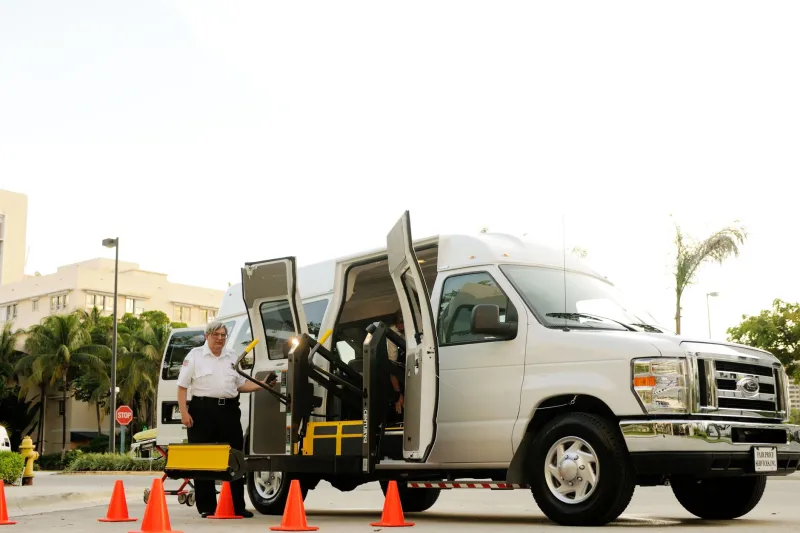
Maya had a full afternoon mapped out — dry cleaning, a Costco run, a birthday card she'd been putting off for two weeks. She'd spotted the mobile clinic van parked at the edge of her usual shopping center a few times before. White, clean, with a small sign on the side. She'd always assumed it was for other people. People with more serious problems, or more time to stop.
This time, on a whim, she pulled up the clinic's website while sitting in her car. There was a short check-in form. Estimated wait: about 15 minutes. She figured she had nothing to lose.
"I almost talked myself out of it three separate times," she said. "But I'd already filled out the form, so I just... walked over."
What she found wasn't what she expected.
What the Inside of a Mobile Clinic Actually Looks Like
The van's interior was smaller than a traditional exam room, but not cramped. Think: purposeful. There was a cushioned bench along one side, a fold-down work surface for the provider, and enough medical equipment to handle a solid range of common conditions. It smelled faintly of antiseptic — clinical, but not sterile in the off-putting way a hospital corridor can be.
The provider, a nurse practitioner named Darnell, introduced himself before Maya had fully settled in. No clipboard handed off through a glass partition. No muzak. No one calling her name from across a waiting room.
He asked about her symptoms. She told him. He listened — actually listened, without typing over her — and then walked through what he was thinking out loud. Possible strep, possibly viral. They'd do a rapid test and go from there.
Four minutes later, results were in. Strep. A prescription was sent to the pharmacy two blocks away before she'd even stepped back outside.
Total time from walking up to walking away: just under 22 minutes.
Why the Setting Changes Everything
There's something worth examining about where this interaction took place. Not in a sterile exam room with a paper-covered table and fluorescent lights that make everyone look vaguely unwell. In a parking lot. Between a Starbucks and a T.J. Maxx.
That context — mundane, familiar, completely ordinary — does something to the patient-provider dynamic that's hard to quantify but easy to feel. The power imbalance that often exists in traditional clinical settings softens. You're not a patient who has entered someone else's domain. You're just a person who stepped off the sidewalk for a few minutes.
Maya noticed it immediately. "He talked to me like a person, not a chart. I think part of it was just the vibe — it didn't feel like I was supposed to be nervous or formal."
Research has long suggested that patient comfort and communication quality are closely linked to health outcomes. When people feel at ease, they share more complete information. When they feel rushed or intimidated, they leave things out. A parking lot, it turns out, might be one of the most honest places to have a medical conversation.
The Emotional Piece Nobody Talks About
Beyond the practical efficiency, there's an emotional dimension to accessible care that rarely gets discussed.
For a lot of Americans — especially those who are juggling jobs, kids, aging parents, or all three — healthcare has become something that lives permanently on the back burner. Not because they don't care about their health, but because the friction of accessing care is genuinely exhausting. You have to want it badly enough to carve out time, arrange coverage, navigate a phone tree, and sit in a waiting room for an indeterminate stretch of your day.
Mobile urgent care removes most of that friction. And when the barrier drops, something else happens: people start to feel like their health is actually manageable. Not a crisis to be avoided, but a thing you can tend to — regularly, casually, in between other things you're already doing.
Maya put it simply: "I felt weirdly proud of myself afterward. Like I'd actually handled something instead of just hoping it went away."
That feeling matters more than it might seem.
What Happens When 'Quick' Becomes 'Normal'
Here's the bigger picture worth sitting with: if getting care starts to feel like stopping for coffee — low-stakes, convenient, just part of the flow of a regular day — what does that do to preventive health habits over time?
Right now, the average American puts off medical attention for far too long. A 2023 survey from the American Academy of Family Physicians found that nearly 30% of adults had skipped or delayed care in the past year due to scheduling difficulties or time constraints. That's not apathy. That's a system that hasn't kept up with the way people actually live.
Mobile clinics don't fix everything. They're not a replacement for a primary care relationship, and they're not equipped for emergencies. But for the everyday, middle-ground stuff — the sore throats, the UTIs, the minor injuries, the blood pressure checks that keep getting postponed — they offer something the traditional model often can't: care that meets you where you are, literally.
When that becomes the norm rather than the novelty, the ripple effects could be significant. More early interventions. Fewer conditions that escalate because someone waited too long. A population that's slightly less afraid of the process of getting better.
The Parking Lot as a Place of Care
Maya picked up her prescription, grabbed her dry cleaning, and made it to Costco before the sample stations ran out of mini quiches. Her Saturday, largely, went as planned.
But something had shifted. The next time she felt that familiar scratch at the back of her throat, she didn't immediately start calculating how inconvenient it would be to deal with. She thought about the van. The 22 minutes. The nurse practitioner who talked to her like a person.
Sometimes the most powerful thing a healthcare system can do is make itself easy to say yes to.
The parking lot, it turns out, is a pretty good place to start.