On-Demand Medicine Is Great — But Is It Slowly Replacing Something You Actually Need?
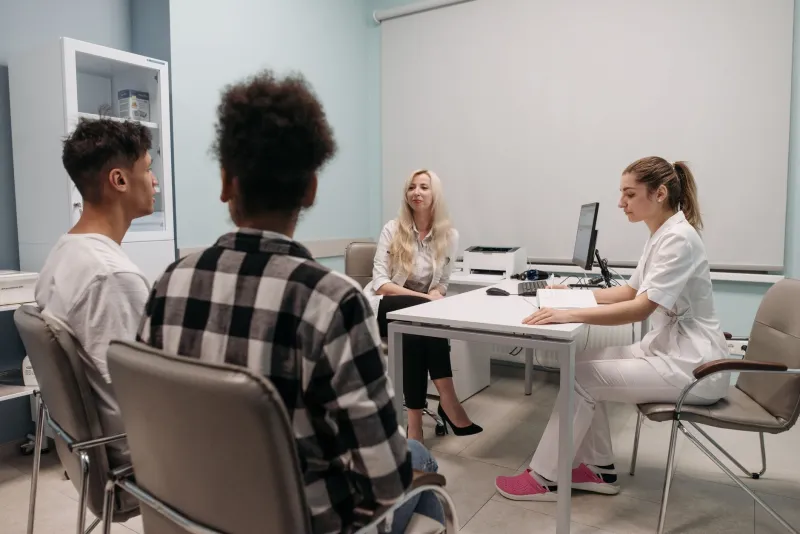
Let me be upfront about something: we think mobile and curbside care is a genuinely good thing. It's what we're built around here at Curbside Care Clinic, and we've seen it make a real difference for real people — the working mom who got her strep treated between school pickup and dinner, the guy who avoided a four-hour ER wait for a wound that needed three stitches, the freelancer without great insurance who finally got her blood pressure checked because the price was actually manageable.
 Photo: Curbside Care Clinic, via img.freepik.com
Those things matter. Access to timely, affordable medical care matters.
But here's what I've been thinking about lately, and I want to be honest with you about it: convenience is not the same thing as comprehensive care. And as on-demand medicine becomes a bigger part of how Americans manage their health, it's worth having a real conversation about what we might be quietly trading away.
The Doctor Who Knows Your Name — and Your History
There's something that happens over time when you see the same primary care physician year after year. They learn things about you that no intake form captures. They notice that you're more anxious than usual. They remember that your father had a heart attack at 58 and factor that into how they interpret your cholesterol numbers. They catch the slow, subtle changes — the gradual weight gain, the creeping blood pressure trend — that only become visible across years of data points.
That relationship is called continuity of care, and research consistently shows it produces better health outcomes. A 2018 study in the BMJ found that patients with a consistent GP had significantly lower mortality rates than those without one. Another analysis from the Annals of Family Medicine found that continuity of care reduced hospitalizations and emergency department use over time.
Think about that last one for a second. Strong primary care relationships actually reduce the situations that send people to urgent care in the first place.
What On-Demand Care Does Brilliantly
None of that is an argument against mobile medicine. It's an argument for using it wisely.
Curbside and on-demand care absolutely shines in specific situations. Acute, time-sensitive issues — a UTI at 9 PM, a suspicious wound on a Sunday afternoon, a flu that needs a rapid test and a prescription — are exactly what mobile providers are built for. They're also invaluable for people who face genuine structural barriers to traditional care: those without reliable transportation, people in healthcare deserts, shift workers who can't take a Tuesday morning off for an appointment.
For those populations, a mobile clinic isn't a shortcut. It's often the only realistic option. And that's a powerful thing.
The issue arises when on-demand care starts functioning as a replacement for something it was never designed to be.
The Fragmentation Problem
Here's a scenario that plays out more often than it should: someone uses three different telehealth apps and two mobile urgent care services over the course of a year. Each visit generates its own record, its own prescription, its own snapshot of that moment in time. Nobody is looking at the full picture. Nobody notices that this person has been treated for a sinus infection four times in twelve months — which might be a sign of an underlying immune issue, allergies, or a structural problem worth investigating.
That's the fragmentation problem. And it's real.
When medical care is distributed across a dozen disconnected touchpoints, the connective tissue disappears. Conditions that develop slowly — high blood pressure, pre-diabetes, depression, thyroid dysfunction — don't announce themselves dramatically. They whisper. And you need someone who's been listening over time to hear them.
The Argument for Integration, Not Opposition
The good news is that this doesn't have to be an either/or situation. The strongest version of modern healthcare isn't mobile care versus traditional medicine — it's mobile care working in concert with a primary care relationship.
Think of it this way: your PCP is your health's general contractor. They see the whole blueprint, manage the big projects, and coordinate the specialists when something complex comes up. Mobile urgent care is the skilled tradesperson who shows up fast when something breaks unexpectedly. You need both. One doesn't make the other obsolete.
The best mobile providers already operate with this philosophy. They document visits carefully, communicate with patients' PCPs when relevant, and actively encourage people to maintain primary care relationships rather than positioning themselves as a full replacement.
If a mobile provider you're using doesn't do those things, that's worth paying attention to.
A Word About Preventive Care
This is where I want to push back hardest on the pure convenience model, because it's where the stakes are highest.
Preventive care — colonoscopies, mammograms, annual blood panels, cervical cancer screenings, cardiovascular risk assessments — saves lives. These aren't dramatic interventions. They're quiet, unglamorous appointments that catch things before they become catastrophic. And they require a provider who knows you well enough to know what to look for.
Mobile urgent care, as currently structured, is not equipped to own this part of your health. It's not what the model is built for, and most mobile providers will tell you exactly that. Relying on curbside visits while skipping your annual physical isn't a health strategy — it's a gap that tends to close in uncomfortable ways down the road.
So, What's the Move?
If you don't have a primary care physician and you've been leaning entirely on urgent care — mobile or otherwise — now is a genuinely good time to establish that relationship. Many PCPs are accepting new patients, and federally qualified health centers offer sliding-scale fees for those without insurance.
If you do have a PCP, use mobile care the way it's meant to be used: for the stuff that can't wait and doesn't require your full medical history to treat. Then loop your doctor in when it's relevant.
And if you're a mobile care enthusiast who thinks this whole column is slightly overcautious — fair enough. You might be right that I'm being conservative. But I'd rather err on the side of encouraging people toward more complete care than less.
The Bottom Line
Convenience is genuinely valuable. Making healthcare more accessible is genuinely important. Mobile urgent care is a legitimate, meaningful part of what a modern health system should look like.
But convenience works best as a feature of a larger system — not as a substitute for one. The goal isn't to make medical care frictionless at the expense of making it thorough. It's to make it both.
Your health deserves the full picture. Make sure someone out there has it.