The Procrastination Tax: Why 'Later' Costs You More When the Clinic Is Already at Your Curb

Care Has Never Been This Close. So Why Are People Still Waiting?
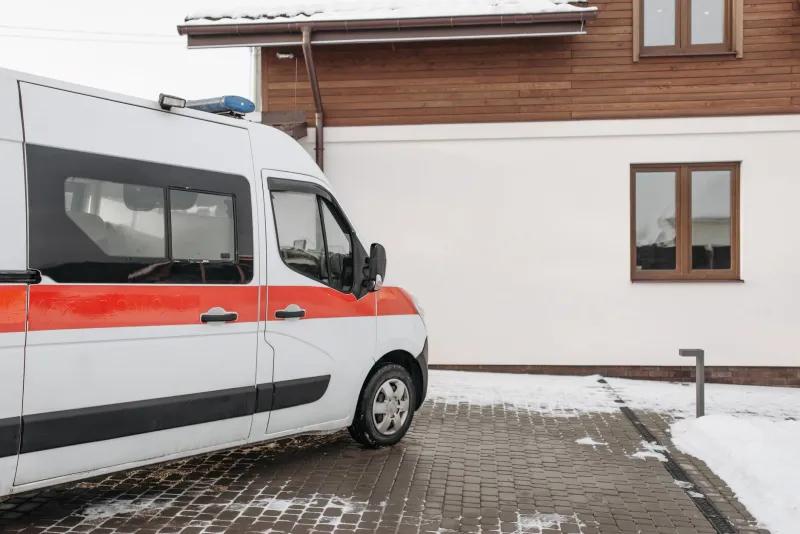
There's a van parked two blocks from your apartment. It's staffed by a nurse practitioner, stocked with basic diagnostics, and it takes walk-ins. The wait is usually under 20 minutes. You've walked past it three times this week.
And yet — that nagging cough is now entering its third week.
This is the quiet paradox sitting at the heart of mobile healthcare's rapid expansion. Proximity to care has never been greater for millions of urban Americans. And yet the psychology of delay — what researchers sometimes call healthcare procrastination — hasn't budged nearly as much as the clinics themselves have moved. Understanding why that gap exists, and what it actually costs people, is one of the more important conversations happening in public health right now.
The 'I'll Get Around to It' Effect
Psychologists have a name for the phenomenon where easy access doesn't automatically produce action: it's related to what behavioral economists call the intention-action gap. We intend to do the thing. We just don't do it yet.
With healthcare, that gap has historically been propped up by real, legitimate barriers — cost, distance, time off work, childcare, fear of bad news. Mobile clinics were designed to knock down most of those walls. And they have, in many documented cases. But removing a barrier doesn't automatically dissolve the habit of avoidance that formed around it.
"When people have been conditioned to see healthcare as difficult and disruptive, convenience alone doesn't immediately rewire that," says one behavioral health consultant who has worked with urban mobile clinic programs. "You can park the clinic on someone's block and they'll still say they'll go next week."
Next week, of course, has a way of becoming next month.
What the Data Actually Shows
Studies on mobile clinic utilization consistently show something interesting: awareness of a nearby mobile clinic is high in communities where those services operate regularly. Utilization, however, lags significantly behind awareness. In some surveys, fewer than one in three people who knew about a nearby mobile health service had actually used it.
That's not a failure of the mobile clinic model — it's a reflection of deeply ingrained behavioral patterns around healthcare-seeking. People tend to seek care reactively, not proactively. They wait for a symptom to become disruptive before acting, regardless of how easy acting has become.
The problem is that the point at which a symptom becomes disruptive is often well past the point at which it's cheapest and easiest to treat.
The Real Price Tag on 'Just a Little Longer'
Let's get specific about what delay actually costs, because it's not abstract.
A urinary tract infection caught early — the kind a mobile clinic can diagnose and treat in one visit with a quick urine dipstick and a prescription — typically runs between $150 and $300 to treat. The same infection, left for two or three weeks until it migrates to the kidneys, becomes a pyelonephritis case that may require IV antibiotics and potentially a hospital stay. You're now looking at thousands of dollars, days of missed work, and a much more miserable recovery.
High blood pressure is another example. It rarely feels like anything for years. But a mobile clinic visit — the kind you could squeeze in during a lunch break — can flag it early and get you on a management plan. Without that catch, the first noticeable symptom might be a stroke or a heart attack. The downstream costs, medical and personal, are almost incomprehensible by comparison.
This isn't scare-mongering. These are the actual trajectories that preventable delays produce, documented in emergency department admission data across the country.
The Convenience Illusion
Here's the thing nobody loves to say out loud: sometimes people don't use mobile clinics because they feel too casual. The very informality that makes them accessible to some patients makes others quietly skeptical.
"People have been trained to equate inconvenience with quality," notes one healthcare access researcher. "If getting care feels too easy, some patients unconsciously wonder if it's real care."
This is a perception problem the mobile health industry is actively working against. And it's worth naming, because it contributes to delay in a different way — not avoidance born from laziness, but avoidance born from misplaced doubt about whether curbside care will actually resolve the issue.
Spoiler: for the vast majority of common conditions — respiratory infections, skin issues, minor injuries, routine screenings, medication refills — it absolutely will.
Breaking the Wait Habit
Changing behavior requires more than access. It requires a mental shift in how people frame healthcare-seeking. A few things that seem to help:
Treat the van like a pharmacy. Most people don't agonize over whether to stop at Walgreens. They just stop. Reframing a mobile clinic visit as a similarly low-stakes errand — something you do because it's there and it's useful — removes some of the psychological weight around it.
Use the low-stakes moment. Mobile clinics are ideal for the "probably nothing" situations. That's actually the point. Going in when you're mildly concerned, rather than waiting until you're genuinely worried, is exactly the behavior that prevents the expensive outcomes described above.
Know what's covered. One of the biggest sources of delay is uncertainty about cost. Many mobile clinics accept major insurance plans, Medicaid, and Medicare. Many offer sliding-scale fees. Knowing that before you need care removes the hesitation in the moment.
The Clinic Is Already There. The Move Is Yours.
The mobile healthcare model has done something genuinely impressive: it has brought the point of care to where people already are. That's a structural achievement that took real effort to build.
But structure can only do so much. The rest is a decision — a small, low-stakes, 20-minute decision that has an outsized effect on your health and your wallet. The van isn't going to knock on your door. But it's closer than it's ever been.
Waiting is always an option. It just isn't usually a free one.