How One City Parked Its Way Out of a Diabetes Epidemic

Photo: Julien Harneis, CC BY-SA 2.0, via Wikimedia Commons
Type 2 diabetes doesn't announce itself. It builds quietly over years — blood sugar creeping upward, symptoms easy to dismiss as tiredness or stress — until the damage is already done. By the time most Americans get a formal diagnosis, they've often been living with the condition, or its precursor, for a decade or more.
That diagnostic lag is expensive. It's also largely preventable. And one city decided to stop waiting for people to walk through clinic doors.
The Problem With Waiting
Philadelphia has one of the highest rates of diabetes in any major American city. According to the Philadelphia Department of Public Health, roughly 15 percent of adults in the city have been diagnosed with the disease — and that figure doesn't account for the estimated one in four people who have it but don't know it. Prediabetes, which affects more than a third of U.S. adults nationally, is even more invisible.
Traditional screening protocols depend on patients showing up to a primary care provider, getting bloodwork ordered, and following up on the results. In a city where large swaths of the population lack consistent access to primary care — due to cost, insurance gaps, or simply not having a regular doctor — that chain breaks down at the first link.
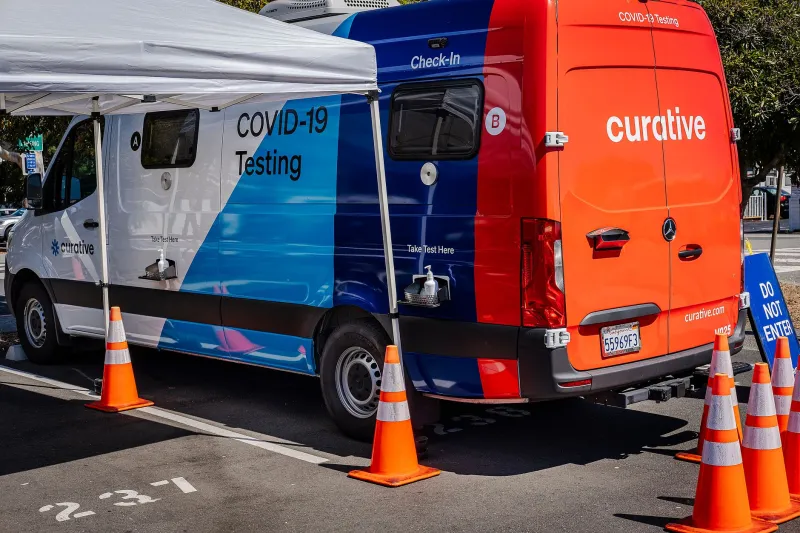
So in 2021, a coalition of Philadelphia health organizations, working with mobile health providers and transit authorities, launched a pilot program with a different premise: bring the screening to the commute.
Stations, Storefronts, and Saturday Mornings
The program placed mobile health units at seven high-traffic locations across the city: two SEPTA transit hubs, a large indoor market, two community centers in underserved ZIP codes, and two shopping corridors in neighborhoods with documented gaps in healthcare access.
The screening itself was deliberately simple. A fingerstick blood glucose test takes about ninety seconds. Staff also collected basic biometric data — height, weight, blood pressure — and administered a short risk assessment questionnaire. The whole process, from stopping at the van to walking away with results and resources, averaged under twelve minutes.
In the first six months, the program screened more than 8,400 people. Of those, 23 percent showed blood glucose levels consistent with prediabetes. Another 6 percent had readings that warranted immediate follow-up for possible undiagnosed type 2 diabetes.
To put that in context: if those same individuals had waited to be screened at a routine medical appointment, many would not have been flagged for years. Some might never have been flagged at all.
The Geography of Risk
One of the most telling findings from the program wasn't just how many people were identified — it was where they were found.
Screening rates at transit hubs and shopping corridors significantly outperformed those at community centers, which had been assumed to be the highest-yield locations. The reason, researchers concluded, was foot traffic and spontaneity. People who stopped at a transit station were already in motion, already slightly ahead of schedule or killing a few minutes. The bar to participation was lower than it would be if they'd had to make a deliberate trip.
"We were catching people who had no intention of getting screened that day," says one of the program's lead coordinators. "That's the whole point. The people who would have scheduled a screening appointment probably already had a doctor. We were reaching the people who don't."
The ZIP codes with the highest rates of positive screens overlapped almost precisely with neighborhoods that public health data had already flagged as medically underserved — areas with fewer primary care providers per capita, lower rates of insurance coverage, and higher rates of diet-related chronic disease.
What Happens After a Positive Screen
Identification is only valuable if it leads somewhere. This is where many community screening programs fall apart: someone gets a concerning result, receives a pamphlet, and nothing changes.
The Philadelphia program built a follow-up infrastructure from the start. Every participant with an elevated reading was connected — on the spot — with a care navigator who could schedule a confirmatory lab test, link them to a primary care provider, and enroll them in a diabetes prevention program (DPP) covered under most insurance plans and available through several local nonprofits at no cost.
Of the 500-plus individuals identified with likely prediabetes or diabetes in the first six months, 61 percent completed at least one follow-up appointment within ninety days. That figure is substantially higher than typical referral follow-through rates, which hover around 30 to 40 percent even in clinical settings.
"The warm handoff is everything," says Dr. Angela Ferris, an endocrinologist who served as a clinical advisor to the program. "If you hand someone a piece of paper and tell them to call a number, most of them won't. If you sit with them for five minutes and help them make an appointment before they walk away from the van, the odds change dramatically."
The Cost Math
Prevention is cheaper than treatment. That's not a new idea, but it's one that health systems have historically struggled to act on, partly because the savings from prevention are diffuse and long-term while the costs of intervention are immediate and visible.
The Philadelphia pilot program cost approximately $1.2 million to operate over its first year, covering staffing, equipment, supplies, and the care navigation component. Independent health economists who reviewed the program estimated that early identification and intervention in even a fraction of the at-risk individuals screened could generate between $4 and $7 in downstream cost savings for every dollar spent — through reduced emergency department visits, fewer diabetes-related hospitalizations, and lower rates of complications like kidney disease and neuropathy.
Those numbers are projections, not guarantees. But they align with findings from similar programs in cities including Houston, Detroit, and Denver, where mobile diabetes screening initiatives have shown consistent returns on investment when paired with robust follow-up infrastructure.
Scaling What Works
Philadelphia's program has since expanded to twelve locations and added A1C testing — a more comprehensive blood sugar measure — alongside the initial fingerstick screen. City health officials are exploring partnerships with employers and anchor institutions to extend coverage to workplaces and university campuses.
Other cities are watching closely. Mobile health networks in Chicago, Baltimore, and Los Angeles have reached out to study the program's model, particularly its emphasis on location strategy and the care navigator role.
The lesson isn't complicated, even if executing it requires real coordination: people don't need to be convinced to care about their health. They need the infrastructure to do something about it without rearranging their lives. Put the clinic where the people are, make the ask small, and make the next step easy.
Diabetes won't be solved by a van parked at a bus stop. But it can be caught earlier — and earlier is the difference between management and crisis.