Same City, Different World: How Mobile Clinics Are Reaching the Neighborhoods Medicine Left Behind
Picture two neighborhoods in the same city. One has a urgent care center on the corner, a pharmacy next door, and a primary care office two blocks down. The other has a check-cashing spot, a fast-food strip, and a bus ride that takes 45 minutes to reach the nearest clinic — assuming you can get off work in time.
Both neighborhoods exist inside the same zip code system. But in terms of healthcare access, they might as well be in different countries.
This isn't a rural problem. It's happening right now in Chicago's South Side, in the Bronx, in South LA, in Detroit's east end, and in dozens of other urban communities where hospitals technically exist nearby but meaningful, affordable, accessible care does not. And increasingly, the thing closing that gap isn't a new hospital wing or a government program — it's a clinic on wheels.
The Myth of the Well-Served City
There's a persistent assumption that cities, by definition, are medically well-resourced. They have research hospitals, specialists, trauma centers. They have Walgreens on every corner. How could urban residents possibly lack access to care?
Pretty easily, it turns out.
The Health Resources and Services Administration (HRSA) designates thousands of areas across the country as Health Professional Shortage Areas (HPSAs). A significant chunk of those designations fall within major metropolitan areas — not in rural counties, but in dense urban neighborhoods where poverty rates are high, insurance coverage is low, and the nearest accepting primary care physician might have a six-week wait.
A 2021 study published in the Journal of General Internal Medicine found that within cities like New York, Los Angeles, and Houston, the geographic distribution of primary care providers is deeply skewed toward wealthier, whiter neighborhoods. Residents in lower-income ZIP codes were significantly more likely to rely on emergency departments for conditions that should have been caught and treated far earlier.
The ER becomes a first resort. Preventable hospitalizations spike. Chronic conditions go unmanaged. And the cycle continues.
Who Gets Left Out — and Why
The communities most affected by urban healthcare deserts share some common characteristics. They tend to have higher proportions of uninsured or underinsured residents. They're more likely to be majority Black, Latino, or immigrant populations. Transportation is often a real barrier — not just inconvenient, but genuinely prohibitive when you're working two jobs and can't afford to lose a shift.
Language access is another piece of the puzzle. Clinics that don't offer services in Spanish, Mandarin, Haitian Creole, or other widely spoken languages in their area create invisible walls for patients who might otherwise seek care.
And then there's the trust issue. Communities that have historically experienced medical neglect, discrimination, or outright harm — from forced sterilizations to the Tuskegee study to the routine dismissal of Black patients' pain — don't always rush toward healthcare institutions. That distrust is earned, and it's real.
Mobile clinics, when done right, can start to chip away at all of these barriers at once.
Why a Van Can Go Where a Building Can't
Here's the practical genius of mobile healthcare: it inverts the traditional model. Instead of asking patients to rearrange their lives to reach care, the care rearranges itself to reach patients.
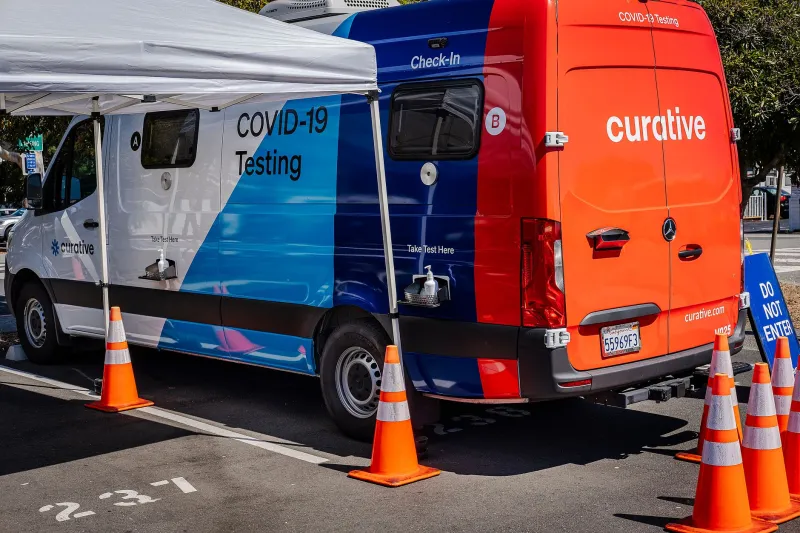
A mobile clinic can park outside a community center in a medically underserved neighborhood on a Tuesday morning. It can show up at a food pantry where it knows food-insecure residents are already gathering. It can position itself near a public transit hub, or outside a public housing complex, or at a weekend farmers market in a neighborhood that hasn't seen a primary care provider set up shop in years.
This strategic routing is the key. The most effective mobile health programs don't just drive around hoping to find patients — they work with community organizations, churches, schools, and neighborhood leaders to identify where the gaps are and meet people in spaces they already trust.
In cities like Boston, mobile health vans operated by community health centers have been serving neighborhoods like Roxbury and Dorchester for decades, offering everything from blood pressure checks to HIV testing to flu shots. In New York, programs like the Ryan Health mobile unit have brought primary and preventive care directly into housing projects and community gathering spaces in upper Manhattan and the Bronx.
These aren't novelty services. They're filling a structural void.
The Data Is Starting to Back This Up
Research on mobile clinic outcomes in urban settings is growing, and the early picture is encouraging. A study from the American Journal of Public Health found that mobile clinics serving low-income urban populations led to measurable improvements in management of conditions like hypertension and diabetes — conditions that disproportionately affect communities of color and that worsen dramatically without consistent monitoring.
Another analysis found that for every dollar invested in mobile health services, emergency department costs dropped — because patients who had access to routine care weren't waiting until a health crisis forced them into the ER.
Prevention, it turns out, is a lot cheaper than crisis. Mobile clinics make prevention possible for people who've never had reliable access to it.
More Than a Medical Visit
One thing that gets overlooked in conversations about mobile healthcare is what happens beyond the clinical encounter. When a clinic shows up consistently in a neighborhood, it becomes a touchpoint. Providers start to know patients by name. Community members start to see healthcare as something that belongs to them, not something they have to petition for.
That relationship-building matters enormously in communities where medical distrust runs deep. A nurse practitioner who shows up every other Thursday at the same corner, who speaks the language, who doesn't make assumptions — that's not just a service. That's a shift in what healthcare feels like.
Some mobile programs go even further, connecting patients to social services, housing resources, food assistance, and mental health support. Because the reality is that health doesn't exist in isolation from the rest of someone's life. A mobile clinic that understands that is doing something pretty different from just parking a van and handing out blood pressure cuffs.
What Still Needs to Happen
Mobile clinics are not a complete fix. They can't replace the need for robust community health infrastructure — federally qualified health centers, expanded Medicaid coverage, investment in the healthcare workforce in underserved areas. The zip code problem has roots deep in housing policy, economic inequality, and decades of disinvestment. No van solves all of that.
But as a tool for meeting people where they are — literally and figuratively — mobile healthcare is proving itself. And in a system that has consistently failed to show up for its most vulnerable patients, showing up is not a small thing.
The city doesn't end at the hospital district. Neither should care.