Not a Convenience Feature: How the Clinic Parked on Your Block Is a Lifeline for Millions
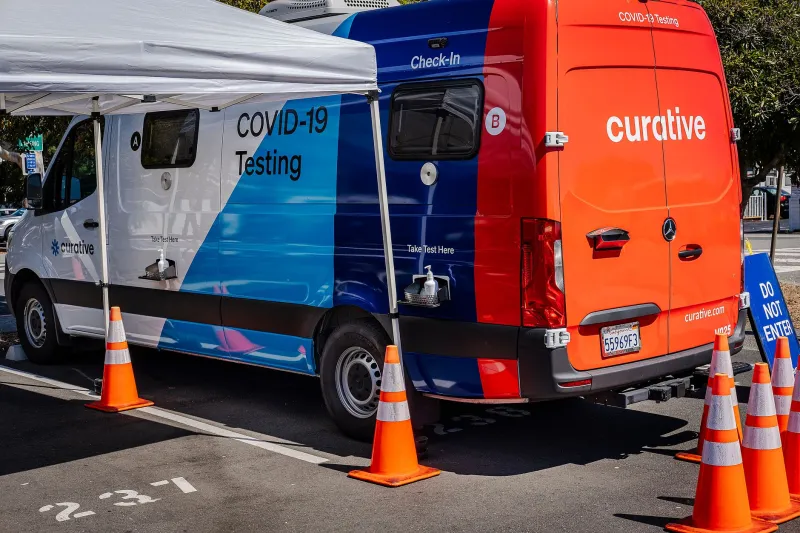
There's a version of the mobile clinic story that gets told a lot — the one about the busy professional who squeezes in a strep test between back-to-back Zoom calls, or the parent who handles a kid's ear infection without burning a vacation day. That story is real, and it matters.
But there's another version that doesn't get nearly as much airtime. It's the one about the 58-year-old warehouse worker who hasn't seen a doctor in four years because she can't afford to miss a shift. The one about the day laborer who avoids the clinic two miles away because he doesn't have a social security number and doesn't know what questions they'll ask. The one about the 74-year-old man in a walkup apartment whose daughter lives in another state and whose bus route doesn't go anywhere near a medical office.
For those people, a van parked at the corner isn't a convenience upgrade. It's the whole ballgame.
The Barrier Isn't Always Distance
When people talk about healthcare access, the conversation usually lands on geography — rural communities without nearby hospitals, or underserved zip codes with no primary care physicians. Those are real problems. But in cities, the barriers look different and, in some ways, more invisible.
You can live two blocks from a major hospital system and still have almost no access to care. Maybe you're uninsured and terrified of a bill you can't pay. Maybe you work a split shift and the clinic closes at 5 PM. Maybe you don't speak English well enough to navigate intake paperwork on your own. Maybe you've had bad experiences with the healthcare system before — experiences that left you feeling dismissed, surveilled, or simply not worth the staff's time — and you've decided it's not worth trying again.
These aren't excuses. They're structural realities that have pushed millions of Americans into a pattern of delayed care, untreated conditions, and emergency room visits that could have been avoided years earlier.
Gig Workers and the Sick Leave Trap
The rise of gig work has created a massive population of people who are, on paper, employed — but who receive none of the traditional employment benefits that make healthcare manageable. No paid sick leave. No employer-sponsored insurance. No flexibility to take a Tuesday morning off without losing income.
For a rideshare driver or a freelance delivery worker, a doctor's appointment isn't just a scheduling inconvenience. It's a financial calculation. Two hours off the road might mean $40 to $60 in lost earnings, plus whatever the visit costs out of pocket. When you're already living close to the margin, that math doesn't work.
A mobile clinic that parks near a transit hub, a warehouse district, or a busy commercial corridor changes the equation. A 30-minute visit before a shift starts, or during a natural break in the day, becomes something that's actually possible. Not easy, but possible — and sometimes that's the difference between someone getting care and someone not.
The Trust Problem Nobody Talks About Enough
For undocumented immigrants and mixed-status families, the barrier to care isn't just financial — it's fear. Fear of being asked for documentation. Fear that information shared with a healthcare provider could somehow find its way to the wrong hands. Fear built over years of navigating a country that sends mixed signals about who belongs and who doesn't.
Many community health advocates point out that traditional clinical environments — with their intake forms, ID requirements, and institutional feel — can read as threatening to people who've learned to stay under the radar. A van in a neighborhood, staffed by providers who speak Spanish or Haitian Creole or Tagalog, who don't lead with paperwork, who come to your community rather than asking you to enter theirs — that's a fundamentally different kind of invitation.
Some mobile clinic programs have partnered directly with community organizations and immigrant advocacy groups to build that trust deliberately, showing up consistently in the same places, at the same times, with the same faces. Consistency, it turns out, is its own form of care.
Getting Older Without Getting Around
Transportation is one of the most underestimated barriers to healthcare for elderly Americans, particularly those who live alone, have given up driving, or rely on fixed-route public transit that doesn't always go where they need to go.
Missed appointments are epidemic among this population. Studies have consistently shown that transportation problems lead to skipped follow-ups, lapses in medication management, and delayed diagnoses that become far more serious — and far more expensive — over time. For older adults managing multiple chronic conditions, those gaps in care compound quickly.
A clinic that comes to a senior living complex, a community center, or a neighborhood block — rather than requiring a complicated, exhausting trip across town — removes a barrier that no amount of patient motivation can overcome on its own. You can't will yourself onto a bus that doesn't run.
What "Meeting People Where They Are" Actually Means
The phrase gets used so often in public health conversations that it's started to sound like a slogan. But mobile care is one of the few models that takes it literally.
Meeting people where they are means showing up at the laundromat parking lot in a neighborhood where the nearest urgent care is a $20 Uber ride away. It means offering services in languages other than English. It means not requiring insurance as a condition of being seen. It means building a care experience that doesn't make someone feel like a burden or a problem to be managed.
None of that is easy, and mobile clinics aren't a silver bullet. They work best when they're connected to a broader care network — when a visit to the van can lead to a referral, a follow-up, a relationship with a primary care provider. The goal isn't just to treat the immediate problem. It's to open a door that's been closed for a long time.
A Different Way to Measure Success
For a lot of mobile clinic programs, success doesn't look like the metrics that dominate traditional healthcare — revenue per patient, throughput, procedure volume. It looks like the diabetic patient who finally got her A1C checked after three years of avoidance. The construction worker who found out his blood pressure was dangerously high and got started on medication before he had a stroke. The teenager who got vaccinated because the clinic came to his school.
Those outcomes are harder to quantify. But they're exactly the kind of outcomes that determine whether a community is actually healthy — not just whether it has hospitals nearby.
Mobile and curbside care is sometimes framed as a tech-forward amenity, a modern convenience for people whose schedules are too full for traditional medicine. And sure, it's that too. But the deeper story — the one that deserves more attention — is about who gets to be a patient in the first place. For millions of Americans who've been quietly excluded from that category, a clinic that shows up in their neighborhood isn't a novelty. It's the first real answer they've gotten in years.