Your Morning Commute Is a Health Appointment You Keep Forgetting to Schedule

Every weekday morning, tens of millions of Americans follow the same choreography. Coffee. Bag. Keys. Train. Or coffee. Bag. Keys. Car. Or some variation that involves a bus, a bike, a rideshare, or a long walk past the same storefronts they've walked past five days a week for years.
Routine is powerful. Behavioral scientists have spent decades documenting just how deeply grooved our daily patterns become — and how those grooves, once established, can carry almost anything you attach to them. That insight is driving a genuinely interesting shift in how some urban healthcare providers are thinking about preventive care delivery. The idea goes by several names in public health circles, but the most descriptive is probably the simplest: touchpoint medicine.
The premise is straightforward. If you can park healthcare at the points in someone's day where they're already moving — already making decisions, already in motion — you dramatically increase the odds they'll actually use it.
Habit-Stacking Isn't Just for Productivity Podcasts
The psychological concept at the core of touchpoint medicine is called habit-stacking, a term popularized by researcher James Clear in his work on behavioral change. The idea is that new behaviors are far easier to adopt when they're anchored to existing ones. You're more likely to take a vitamin if you put it next to the coffee maker. You're more likely to stretch if you do it immediately after you shower.
The same logic applies to healthcare — and the data is starting to back it up.
A 2021 study out of Johns Hopkins examined patient utilization patterns across mobile health programs in three mid-sized U.S. cities. Researchers found that when mobile clinics were positioned at or near transit hubs during morning and evening commute windows, screening uptake increased by 34% compared to the same clinics operating in residential areas during midday hours. The care didn't change. The location and timing did.
"People aren't avoiding preventive care because they don't value their health," says Dr. Priya Nandakumar, a public health researcher at the University of Michigan whose work focuses on urban care access. "They're avoiding it because it requires them to break their routine. The moment you put care inside the routine, the calculus changes completely."
Where People Already Are
Consider what the average urban commuter passes on a typical morning. A coffee shop. A pharmacy. A grocery store. A gas station. A transit stop where they wait for a train or a bus. These aren't random locations — they're the physical infrastructure of daily life, and they're exactly the kinds of places where a well-positioned mobile clinic can intercept someone on their way somewhere else.
In Chicago's Logan Square neighborhood, a mobile health program run in partnership with the city's transit authority began parking at two elevated train stops in 2022 during the 7–9 AM and 5–7 PM windows. In the first six months, the program conducted over 2,800 screenings — blood pressure, blood glucose, BMI, and flu vaccination — the vast majority of which were with patients who had not sought preventive care in the previous year. The hook wasn't marketing. It was proximity.
Similar programs have taken root near transit hubs in Atlanta, Seattle, and Philadelphia, often in partnership with local employers, grocery chains, and community development organizations. The model varies, but the logic is consistent: healthcare that lives inside your existing path requires almost no activation energy to access.
The Errand Economy and the Five-Minute Window
Commutes aren't the only opportunity. The rise of what urban planners sometimes call the "errand economy" — the cluster of small, routine tasks that anchor people to specific commercial corridors — creates a second layer of touchpoints that mobile health programs are beginning to map deliberately.
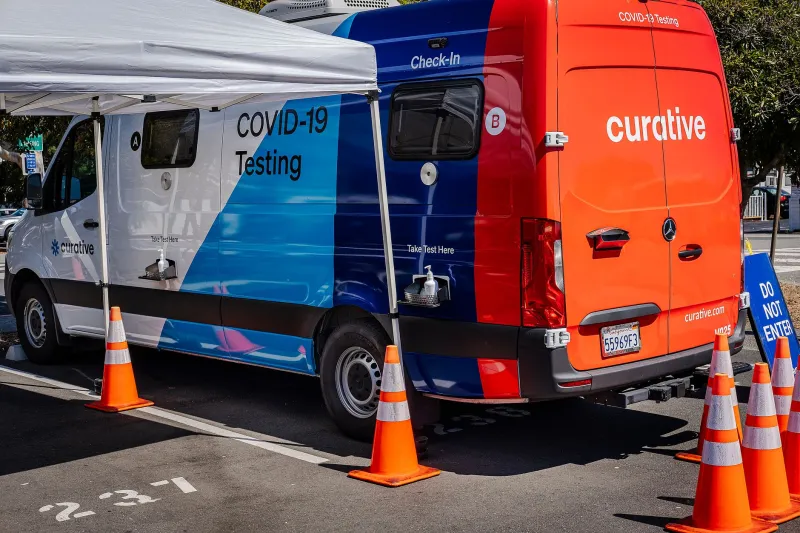
In practice, this looks like a mobile clinic parked in the lot of a busy grocery store on Saturday morning, or positioned near a laundromat in a dense urban neighborhood where residents spend forty-five minutes waiting for a wash cycle. It looks like a van outside a community center on the night of a youth sports league game, where parents are already sitting in folding chairs with nothing to do for an hour.
These moments share a common feature: the person is physically present, they have a small window of unstructured time, and they didn't have to rearrange anything to be there. The opportunity cost of a blood pressure check or a flu shot in that context is close to zero.
Dr. Webb, a family medicine provider who rotates through mobile units in the Mid-Atlantic region, describes it as "meeting people in their already-yes moments. They've already said yes to being somewhere. We're just asking them to say yes to one more thing while they're there."
Designing for the Route, Not the Destination
What makes touchpoint medicine genuinely innovative isn't the technology inside the van. It's the thinking behind where the van parks.
The most effective mobile health programs in the country are doing something that sounds simple but requires real data work: mapping their deployment schedules to the movement patterns of the populations they serve. That means analyzing transit ridership data, foot traffic patterns, employer shift schedules, school calendars, and even grocery delivery trends to identify the windows and locations where a mobile clinic will encounter the highest density of people who are already in motion.
In Houston, one mobile health network uses anonymized cell mobility data — the same kind that retailers use to choose store locations — to optimize their weekly parking schedule across fifteen distinct neighborhoods. The result is a deployment pattern that looks almost nothing like a traditional clinic schedule. The van might be at a transit park-and-ride at 7 AM, a community college campus at 11 AM, and a grocery store parking lot at 4 PM. Each stop is calibrated to the actual movement of actual people.
What Gets Caught When the Clinic Comes to You
The conditions that benefit most from touchpoint-style screening tend to be the ones that are easiest to ignore until they're not — hypertension, prediabetes, high cholesterol, early-stage anemia, STIs, and respiratory infections that look like allergies until they don't.
These aren't conditions that require sophisticated diagnostic equipment. They require a provider, a few minutes, and a patient who showed up. The challenge has always been the last part. Touchpoint medicine doesn't fix everything — it doesn't replace longitudinal primary care relationships, and it doesn't address the deeper structural issues in how American healthcare is organized and funded. But it solves a specific, stubborn problem: the gap between "I should probably get that checked" and actually getting it checked.
For a lot of people, that gap is mostly made of friction. And friction, it turns out, is something you can engineer your way around — one well-placed parking spot at a time.