Healers Who Needed Healing: The Healthcare Workers Quietly Becoming Mobile Clinic Regulars
Photo: Copilot, Public domain, via Wikimedia Commons
Somewhere in America right now, a nurse is walking past a mobile clinic on her lunch break, debating whether she has time to stop. She's been ignoring a persistent cough for three weeks. She knows what she'd tell a patient in that situation. She keeps walking.
This is not a character flaw. It's the predictable result of a healthcare system that extracts enormous physical and emotional labor from its workers while leaving almost no structural space for them to tend to themselves. The irony is so familiar it barely registers anymore — except to the people living it.
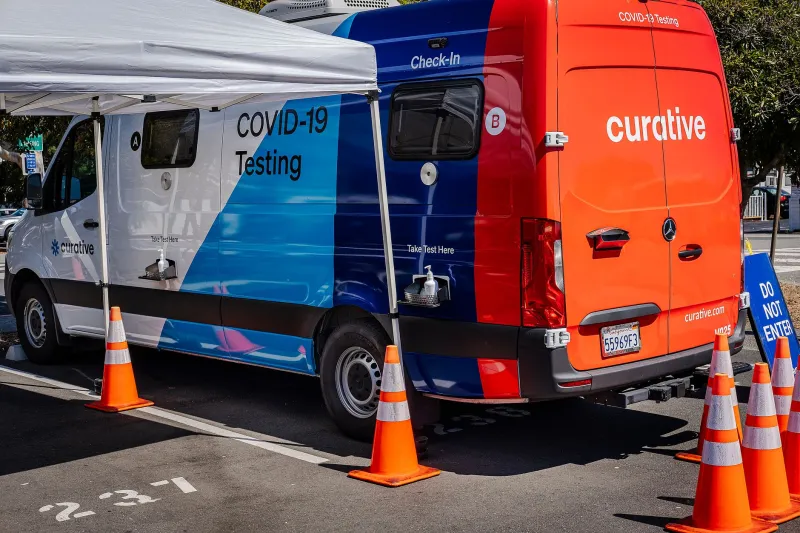
But something is shifting. And it's happening, of all places, in the parking lots and curbside stops where mobile urgent care units are quietly becoming a go-to option for the very professionals who understand healthcare best.
The Cobbler's Children
There's an old saying about the cobbler whose children have no shoes. The healthcare version is less charming and more consequential.
Studies consistently show that physicians and nurses delay their own medical care at rates that would alarm them if they saw those numbers in their patient populations. A 2023 survey published in the Journal of General Internal Medicine found that nearly 40 percent of physicians reported not having a regular primary care provider — the same thing they counsel patients to establish as a baseline of health maintenance. Nurses fare similarly. Therapists, who spend their professional lives helping others process stress and trauma, report some of the highest rates of burnout and untreated mental health conditions in any sector.
The reasons are layered. There's the scheduling problem — most clinics operate during the same hours healthcare workers are on shift. There's the insurance problem — navigating coverage as a freelance travel nurse or a therapist in private practice is its own part-time job. And then there's the identity problem: seeking care feels uncomfortably close to admitting vulnerability in a profession that prizes endurance.
"I kept thinking I'd get to it," says Dominique, a registered nurse who works twelve-hour shifts at a hospital in Nashville. "I had a rash on my arm for two months. I knew what it probably was. I just couldn't make myself take a day off to see someone about it."
She didn't take a day off. She stopped at a mobile clinic parked near her gym on a Saturday morning, between errands. The whole visit took eighteen minutes. The rash was contact dermatitis. She left with a prescription and, she says, a mild sense of embarrassment that it had taken her that long.
The Van as Permission Slip
What mobile urgent care offers healthcare workers isn't just convenience — it's a lowered threshold. The formality of scheduling an appointment, finding a provider who takes your insurance, taking time off, sitting in a waiting room — all of it creates friction that busy professionals are skilled at rationalizing away. Strip out those steps and suddenly the math changes.
Jordan, a physical therapist in Denver, started using a mobile clinic after spotting one parked outside a coffee shop near his apartment. He'd been dealing with shoulder pain — occupational hazard in his field — and had been self-treating for months.
"I knew I was compensating in ways that weren't great," he says. "But booking an ortho appointment felt like a whole project. When I saw the van, I thought, I have twenty minutes right now. So I went in."
The clinician referred him to imaging. He had a partial rotator cuff tear that, left untreated, could have become a surgical situation. He caught it early enough for conservative management.
"The weird thing," Jordan adds, "is that I tell patients all the time that catching things early matters. I just didn't apply it to myself."
Burnout Isn't a Badge of Honor — But It's Treated Like One
The culture of healthcare is, in many settings, still one that glorifies sacrifice. The provider who skips lunch, who stays late, who never calls in sick — these behaviors are modeled and rewarded in ways that make it genuinely difficult to prioritize self-care without feeling like you're letting the team down.
That culture is slowly being interrogated, particularly in the wake of the COVID-19 pandemic, which pushed healthcare worker burnout to a breaking point that was impossible to ignore. But cultural change is slow, and in the meantime, people still need their blood pressure checked.
Dr. Priya Anand, a hospitalist in Chicago, started using mobile clinics after her own cardiologist — who she'd been seeing for a mild arrhythmia — moved practices and the transition fell through the cracks of her schedule.
"I went almost a year without follow-up," she says. "For a condition I monitor in my patients constantly. I finally got it sorted out through a mobile unit that was doing cardiac screenings outside a community center near my hospital. I walked over on my break."
She's now a vocal advocate for mobile health among her colleagues. "There's this assumption that because we work in healthcare, we have better access. In some ways we have worse access, because we understand the system well enough to know how overwhelmed it is, and we feel guilty using it for ourselves."
Modeling What We Preach
There's a larger argument to be made here that goes beyond individual stories. Healthcare workers who model healthy behaviors — who actually use preventive care, who treat their own mental and physical health as a priority — are better providers. The research on this is consistent: clinician wellbeing correlates with patient outcomes, communication quality, and medical error rates.
Mobile urgent care, in this light, isn't just a convenience. It's a structural support for a workforce that has been running on fumes. When a nurse can get a strep test on her break without burning a sick day, when a therapist can have his blood pressure checked between clients without navigating a scheduling system, when a physician can finally get that referral she's been putting off — that's not a small thing for the individual. It ripples outward.
Some hospital systems and large medical groups are beginning to recognize this, partnering with mobile health providers to station units near their facilities specifically for staff use. The uptake, by most accounts, has been strong.
"We thought it might feel weird for clinicians — like admitting they couldn't handle their own care," says one healthcare administrator involved in a staff-focused mobile clinic pilot in the mid-Atlantic region. "Instead, we had people lining up. They were relieved. They'd been waiting for permission."
The Quiet Regulars
If you spend time around a mobile urgent care unit in a city with a major hospital or medical center nearby, you start to notice something. The people in scrubs, the ones who ask slightly more informed questions than the average patient, the ones who are in and out fast because they know exactly what they need — they're becoming regulars.
They're not there because they don't understand medicine. They're there because they understand it better than anyone, and they know that catching something early beats explaining it away. They're there because the van showed up where they already were, and that was finally enough.