The Healer Who Can't Heal Herself: Why Nurses and Doctors Are Quietly Turning to Mobile Clinics for Mental Health Support
The Irony Is Not Lost on Anyone
She's been a registered nurse for eleven years. She works in a large urban hospital, twelve-hour shifts, three days a week. On paper, she has access to an employee assistance program, a hospital-affiliated therapist, and a wellness portal with mindfulness videos.
She has never used any of them.
"I kept telling myself I'd make an appointment," she says, sitting in the break room of the hospital where she works, speaking on the condition that only her first name — Priya — be used. "And then I kept not making it. Because making an appointment at my own hospital feels like... I don't know. Like everyone would know. Like it would follow me."
So last spring, Priya did something that surprised even her. She walked two blocks from the hospital to a mobile clinic that had been parked near a transit hub for the past several months. She checked in. She saw a mental health counselor. She cried for most of the forty-minute session.
"It was the first time in probably two years that I talked to someone about how I was actually doing," she says. "Not a colleague. Not my manager. Someone who had nothing to do with my job."
The Stigma That Doesn't Disappear With a Medical Degree
Healthcare workers are, by almost every measure, in a mental health crisis. A 2023 report from the American Nurses Foundation found that more than half of nurses surveyed reported symptoms of burnout, and nearly one in five reported feeling emotionally exhausted "always" or "very often." Physician suicide rates remain alarmingly high — studies suggest doctors die by suicide at rates up to twice the national average.
And yet, healthcare workers remain among the least likely to seek mental health care.
The reasons are layered. There's the cultural norm of stoicism — the unspoken expectation that people who work in medicine are supposed to be able to handle things. There's the fear that seeking help could affect licensure or hospital privileges. There's the sheer logistical difficulty of fitting a therapy appointment into a schedule built around twelve-hour shifts and rotating days off.
And then there's the specific discomfort of seeking care within the same system where you work — running into colleagues in the waiting room, worrying that your chart could surface in a departmental review, feeling like a patient in a place where you're supposed to be the professional.
"Healthcare workers are trained to be the helpers. Becoming the person who needs help feels like a role reversal that a lot of them haven't emotionally prepared for," says Dr. Kwame Osei, a psychiatrist who has worked with healthcare worker populations for fifteen years. "The stigma doesn't go away just because you have a medical degree. In some ways, it's worse."
Why the Van Works When the EAP Doesn't
This is where mobile clinics enter the picture in a way that nobody really anticipated.
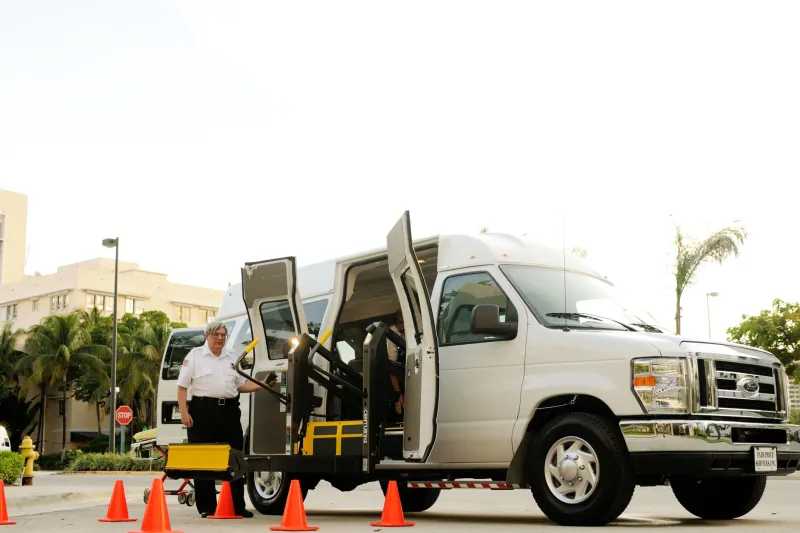
For healthcare workers like Priya, the appeal of a mobile clinic isn't primarily about convenience — it's about distance. Physical distance from their workplace. Psychological distance from their professional identity. The van parked two blocks away isn't affiliated with their hospital. It doesn't share a records system with their employer. Nobody they work with is going to walk past and see them in the waiting room.
"It's anonymous in a way that nothing inside the hospital can be," says Priya. "I know it's technically not totally anonymous, but it feels that way. And that feeling matters."
Several mobile clinic operators have noticed the pattern. At one mobile unit operating in a mid-sized Midwestern city, the clinic's behavioral health coordinator — who asked not to be named to protect patient confidentiality — says that healthcare workers make up a disproportionate share of the mental health appointments booked during weekday lunch hours.
"We started seeing it maybe eighteen months ago," she says. "Scrubs. Badge clips from the hospital three blocks away. People who are clearly clinical staff, coming in on their break. At first I thought it was a coincidence. It's not a coincidence."
For many of these patients, a mobile clinic visit is a starting point rather than a destination — a place to have a first honest conversation and get connected to longer-term support. Counselors at mobile units can provide brief mental health check-ins, screenings for depression and anxiety, and referrals to therapists or psychiatrists outside the hospital system.
What This Reveals About the System
Let's be direct about something: there is something deeply broken about a system in which the people responsible for keeping patients alive are sneaking off on their lunch breaks to process their own trauma in a van.
This isn't a critique of mobile clinics — it's a critique of what their existence as a refuge for healthcare workers tells us. It tells us that the official channels aren't working. That employee assistance programs, however well-intentioned, aren't reaching the people who need them most. That the culture of medicine still makes it genuinely difficult for providers to ask for help without fear.
"If doctors and nurses felt safe getting mental health support through their employers, they wouldn't be going to a van on their lunch break," says Dr. Osei. "The fact that they are is a signal we should be paying very close attention to."
Some healthcare systems are starting to. A handful of hospital networks have begun partnering with mobile clinic operators specifically to provide off-site, confidential mental health services for staff — essentially outsourcing the safe space that they haven't been able to create internally. It's an imperfect solution, but it's a real one.
A Quiet Kind of Courage
Priya has now visited the mobile clinic four times. She's been connected to a therapist she sees every two weeks — someone with no ties to her hospital, someone she found through a referral from the mobile clinic's counselor.
She hasn't told her manager. She hasn't told most of her colleagues. She's told one friend who is also a nurse, and that friend has since made her own appointment at the same mobile unit.
"I kept waiting to feel like I had permission to not be okay," Priya says. "I don't know why I thought I needed permission. But I guess the van gave it to me."
That's not nothing. In a profession that has lost too many people to burnout, to despair, to a culture that treats vulnerability as weakness — a van parked two blocks from the hospital, offering a quiet place to fall apart and start putting things back together, might be exactly what the doctor ordered.
Even if the doctor is the one who needed it.