The Hidden Price of Getting There: One Family's Case for Never Sitting in a Waiting Room Again

The Visit That Took a Full Day
Let me tell you about a Tuesday in March that cost the Reyes family more than they ever put on a credit card.
Danielle Reyes, 38, noticed a rash on her seven-year-old daughter's arm that had been spreading for two days. Not emergency-room urgent, but not something you wait a week on either. She called her daughter's pediatrician. The next available appointment was Thursday. She called the closest urgent care clinic — a 40-minute drive in light traffic, longer in the morning rush. She took the 10:15 slot.
Here's what that appointment actually cost:
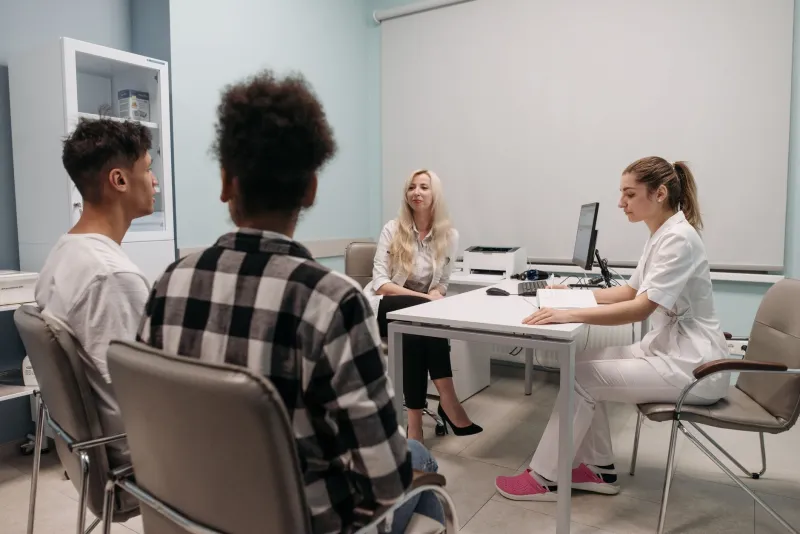
She left work at 9:15 to pick up her daughter from school. That's two hours of PTO — her employer doesn't offer partial-hour leave. She drove to the clinic, hit construction on the freeway, arrived at 10:40. Parking was $18 in the attached garage. She waited 55 minutes in the waiting room. The visit itself took 20 minutes. She drove to a pharmacy to fill the prescription, waited another 25 minutes. Got back to the office at 2:30 PM.
Total time away from work: over five hours. Parking and gas: around $30. Copay: $40. Prescription: $65 after insurance.
Total out-of-pocket: $135. Total time cost: the better part of a workday. Total stress absorbed: considerable.
"And that was a rash," Danielle says. "A rash."
The Costs We Don't Count
American healthcare has a math problem, and it's not the one we usually talk about. We focus — rightly — on premiums, deductibles, and copays. Those numbers are real and often brutal. But there's a whole shadow economy of healthcare costs that never shows up in a policy debate or a hospital bill.
Call it access friction: the accumulated time, money, and stress that comes from simply getting to care.
For a dual-income household with kids, a straightforward medical visit can require logistical choreography that rivals a corporate project. Someone has to leave work. Someone has to handle school pickup or drop-off. Someone has to navigate parking. Someone has to sit in a room with other sick people for an indeterminate amount of time. And if the appointment runs long, the whole downstream schedule — daycare pickup, the work call at 3, dinner — starts to collapse.
Research consistently shows that access friction is one of the primary reasons people delay or skip preventive care. It's not always cost in the traditional sense. It's the cost of getting there — in time, in energy, in the kind of low-grade stress that accumulates quietly and compounds over years.
What Goes Away When the Clinic Comes to You
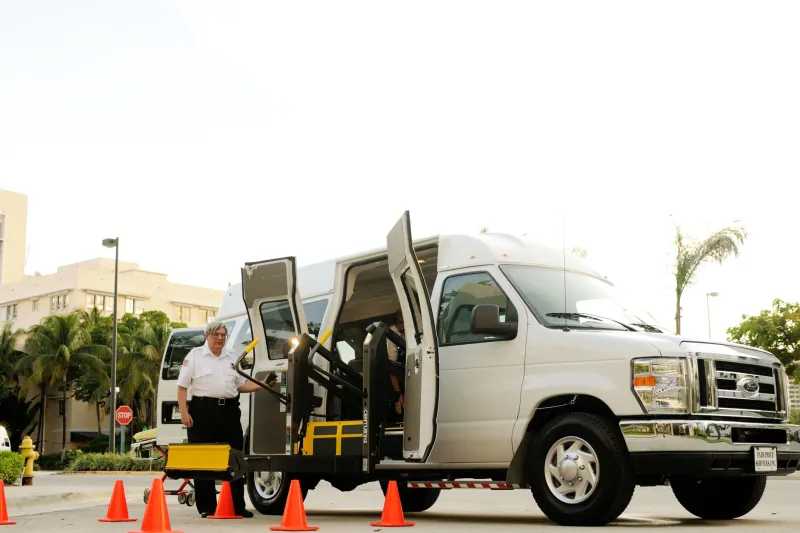
About three months after her marathon Tuesday, Danielle noticed a mobile clinic parked two blocks from her office. Her younger son had been complaining about an earache. She walked over on her lunch break.
She was in and out in 35 minutes. The provider confirmed an ear infection, dispensed a prescription on site, and she was back at her desk before her 1 PM meeting.
Parking: none. Commute: four minutes round trip on foot. Time off work: zero. Stress level: negligible.
"I kept waiting for the catch," she says. "There wasn't one."
This is what mobile urgent care does that's genuinely hard to overstate: it doesn't just make healthcare cheaper in the dollar sense. It makes it cheaper in every sense. It removes the friction that turns a minor medical errand into a production.
For working parents especially, that's not a convenience upgrade. It's a category shift.
The Mental Load Is Real
There's a dimension to healthcare access friction that doesn't show up in any economic analysis: the mental load.
For many families — and disproportionately for women, who still carry the majority of healthcare coordination responsibilities — managing the family's medical needs is a part-time job that nobody acknowledges. Tracking when appointments are due. Remembering who needs what vaccination. Coordinating schedules around clinic hours. Fielding calls from schools about sick kids during work meetings.
This cognitive overhead is exhausting in a way that's difficult to quantify but very easy to feel. And it has a predictable consequence: when the friction is high enough, people start triaging. They skip the visit that seems less urgent. They wait to see if something resolves on its own. They put off the preventive appointment because they can't face the logistics right now.
Mobile clinics interrupt that pattern. When the clinic is on your block — when the barrier to entry is a five-minute walk and no appointment — the calculation changes. Suddenly, preventive care isn't aspirational. It's just something you do on a Tuesday.
A More Honest Accounting
The Reyes family now thinks about healthcare differently. Danielle still uses her primary care doctor for annual checkups and anything that requires continuity of care. But for the acute stuff — the ear infections, the sinus pressure that won't quit, the weird rash that appears on a Wednesday — she goes curbside.
"It's not about avoiding real doctors," she's quick to say. "It's about not spending half a day on something that should take half an hour."
That's a reasonable ask. And it's worth noting that the families for whom access friction is most punishing are often the ones with the fewest options to absorb it — hourly workers who can't take PTO, parents without backup childcare, people who rely on public transit in cities where the nearest clinic is three buses away.
For them, the mobile clinic isn't a lifestyle upgrade. It's what makes preventive care possible at all.
The commute that never happened, the parking spot that was never needed, the afternoon that was never lost — those are the savings that don't show up on an explanation of benefits. But they're real. And for a lot of American families, they might be the most important ones.