What Your Annual Physical Keeps Missing — And Why a Curbside Visit Catches It Instead
The Problem With Seeing Your Doctor Once a Year
Let's be honest about what an annual physical actually is. You schedule it in January with the best of intentions, show up in October when the appointment finally arrives, answer a few questions, get your blood drawn, and head back to your life. Your doctor sees you for maybe fifteen minutes. They're working from memory, last year's chart, and whatever you remember to mention.
That's not a criticism of your doctor. It's a structural problem. One visit per year is a snapshot — a single data point in what should be a continuous story. And single data points miss things.
Mobile clinics, by contrast, operate on a completely different rhythm. When a clinic van parks near your office every few weeks, or shows up at your neighborhood farmers market on Saturdays, the relationship between you and your care team changes. Visits stop being events and start being conversations. And conversations, over time, reveal things that snapshots never could.
How Frequency Changes What Providers Notice
Dr. Amara Osei, a nurse practitioner who's worked mobile urgent care routes in Chicago for three years, puts it plainly: "When I see the same person three times in six months, I'm not just treating their symptoms. I'm tracking their baseline."
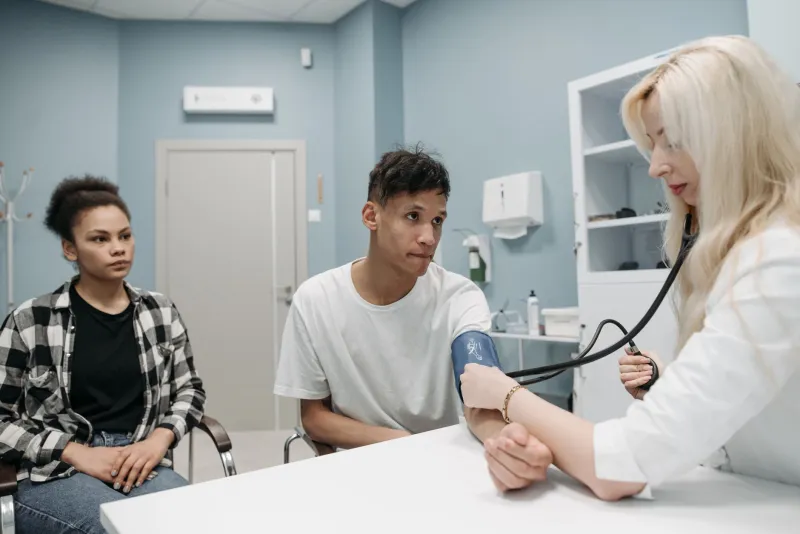
That distinction matters more than most people realize. A blood pressure reading of 138/88 at an annual physical might get flagged, or it might get chalked up to white-coat anxiety and noted for next year. But when a mobile provider sees that same number in March, then again in May, then again in July — the pattern becomes impossible to ignore.
"That's how we caught a patient's early-stage hypertension last summer," Osei recalls. "He'd come in twice for minor stuff — once for a sinus infection, once because he thought he'd sprained his wrist. Both times his blood pressure was elevated. The third visit, I sat him down and we actually talked about it. He'd been stressed, not sleeping, eating badly. We got him on a management plan before it became a crisis."
That kind of continuity is the structural advantage mobile medicine offers. Low-friction access means patients show up more often and for smaller concerns. And smaller concerns, revisited regularly, tell a much bigger story.
The Conditions That Hide in the Gaps
Certain health issues are almost designed to slip through the annual physical model. Type 2 diabetes, for instance, develops gradually. So does high cholesterol. So does depression. These aren't conditions that announce themselves dramatically — they accumulate quietly between appointments, then show up fully formed at your next checkup, already requiring serious intervention.
Mobile clinics are increasingly catching these slow-burn conditions earlier, simply because the barrier to being seen is so much lower. When the clinic is parked outside your building, you don't talk yourself out of mentioning that you've been more tired than usual. You don't decide the headaches aren't worth scheduling an appointment for. You just walk over during your lunch break and bring it up.
That offhand mention — the kind that gets lost when you're trying to remember everything to tell your doctor once a year — is often exactly where early detection lives.
"Patients tell us things at the van that they'd never put on a patient intake form," says Marcus Bellamy, a physician assistant with a mobile health network operating in Atlanta. "They'll say, 'Oh, by the way, I've been really thirsty lately and peeing a lot.' That's a diabetes flag. And they mentioned it almost as an afterthought."
The Data Behind the Difference
Research backs up what mobile providers are seeing on the ground. Studies from community health networks consistently show that patients with more frequent touchpoints — even brief, informal ones — have better outcomes for chronic disease management, mental health monitoring, and early cancer detection.
Part of this is simple math. More contact means more opportunities to catch something. But part of it is psychological. When seeing a provider feels easy and low-stakes, patients are more honest. They don't filter their symptoms through a mental calculus of whether something is "worth" a doctor's visit. They just mention it.
The annual physical, for all its value, carries a kind of performative weight. Patients prep for it. They remember the things they've been meaning to bring up. They sometimes downplay things that feel embarrassing. The curbside visit, by contrast, is casual by design. And casual conversations produce different — often more useful — information.
Preventive Care Shouldn't Be a Once-a-Year Project
None of this means you should skip your annual physical. That appointment still serves real purposes: comprehensive bloodwork panels, referrals to specialists, reviewing medications, and maintaining a relationship with a primary care physician who knows your full history.
But treating preventive care as a single annual event is like only checking your car's oil once a year and assuming everything's fine in between. Health doesn't pause between appointments. Your body doesn't wait for a scheduled slot to start developing problems.
Mobile clinics fill the space between those appointments with something the traditional model has never been able to offer: consistent, accessible, low-pressure contact with a care team that learns your patterns over time.
The van parked outside isn't replacing your doctor. It's giving your health the ongoing attention it was always supposed to have — just in a format that actually fits your life.
What to Do With This Information
If you've been treating your annual physical as your entire healthcare strategy, it might be worth rethinking that. Next time you notice something small — a lingering cough, unusual fatigue, a headache that keeps coming back — don't file it away for your next yearly appointment. Step outside and get it checked.
The best time to catch a developing condition is before it's fully developed. And increasingly, the best place to do that is wherever the clinic happens to be parked.