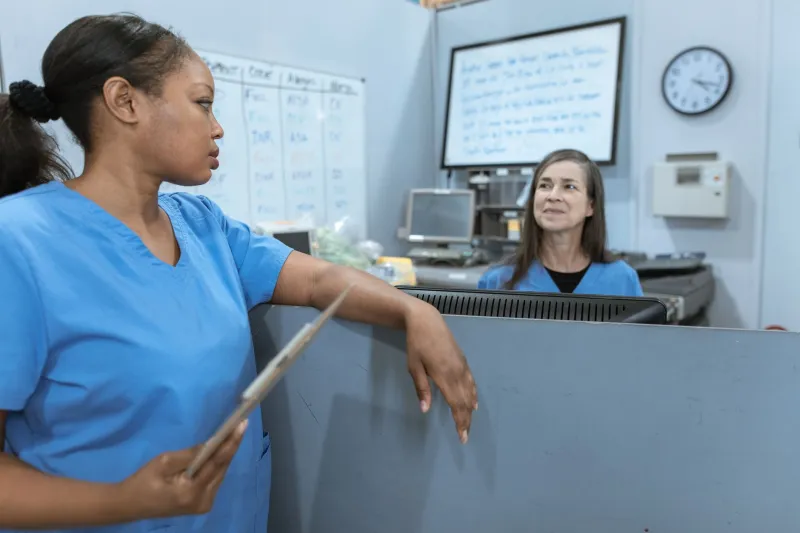
Prenatal Care Shouldn't Depend on Whether You Have a Car: The Hard Truth About Mobile Clinics and Maternal Health
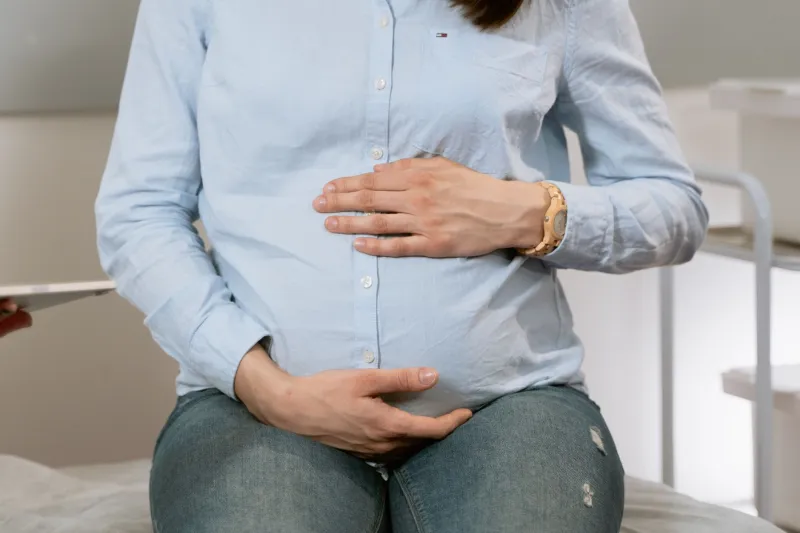
The First Appointment She Couldn't Make
Latoya found out she was pregnant at eight weeks. She was 27, uninsured, working two part-time jobs in Atlanta, and without a regular doctor. The nearest OB-GYN that accepted Medicaid — which she was in the process of applying for — had a six-week wait for new patients.
"Six weeks," she says. "I was already almost two months in. By the time I could get an appointment, I'd be almost four months pregnant and I still hadn't had a single checkup."
A coworker mentioned the mobile clinic that parked near their workplace on Thursday afternoons. Latoya showed up the following week. A nurse practitioner took her blood pressure, reviewed her health history, ordered blood work through a partnered lab, and referred her to a prenatal care coordinator at a local FQHC. She left with a prenatal vitamin sample pack and, for the first time since her positive test, something resembling a plan.
"It wasn't everything I needed," she says. "But it was a start. And at that point, a start was everything."
The Scope of the Problem
Maternal mortality in the United States is a public health emergency. American women die in childbirth at rates higher than any other high-income country — and the disparities by race and income are staggering. Black women are three times more likely to die from pregnancy-related causes than white women, according to the CDC. Uninsured pregnant people are significantly less likely to receive adequate prenatal care, and inadequate prenatal care is directly associated with higher rates of preterm birth, low birth weight, and maternal complications.
The barriers are well-documented: cost, lack of insurance, transportation, inflexible work schedules, childcare, language, distrust of the medical system, and simple geographic distance from OB-GYN providers. In rural areas, the OB-GYN shortage is acute — more than half of rural counties have no OB-GYN at all. But urban areas have their own version of the problem: providers clustered in higher-income neighborhoods, long wait times at safety-net facilities, and a patchwork of services that require patients to navigate multiple systems simultaneously.
Mobile clinics have been positioned — sometimes by the clinics themselves, sometimes by advocates — as one piece of the solution. But what can they actually do? And what are the honest limitations?
What Mobile Clinics Can Realistically Offer
Let's start with what's genuinely possible and already happening.
Early screening and triage. Mobile clinics can perform blood pressure checks, urine tests, blood glucose screening, and basic health history intake — all of which are relevant and important in early pregnancy. Catching gestational hypertension or gestational diabetes early can be genuinely lifesaving, and a mobile unit can flag these conditions and connect patients to appropriate care before a crisis develops.
Referral and care navigation. Some of the most effective mobile clinic programs serving pregnant patients function primarily as connectors — helping patients enroll in Medicaid, find OB-GYN providers who accept their coverage, access WIC benefits, and navigate the bureaucratic maze that surrounds maternal care for low-income patients. This coordination work is unglamorous but profoundly valuable.
Postpartum check-ins. The postpartum period — particularly the first six weeks after delivery — is a critical window that is often missed entirely for low-income patients. Mobile clinics can provide blood pressure checks, postpartum depression screenings, breastfeeding support, and contraception counseling in this window, meeting patients at community sites rather than requiring a separate clinic visit that many new mothers simply can't manage.
STI and prenatal infection screening. Mobile units can screen for infections that, if untreated during pregnancy, carry significant risk — including syphilis, which has seen alarming increases among pregnant women in the U.S. in recent years.
The Real Limitations
None of this means that mobile clinics can replace comprehensive prenatal care. They can't, and it's important to say that clearly.
A standard prenatal care protocol involves 10 to 15 visits across a pregnancy, with ultrasounds, genetic testing, detailed fetal monitoring, and the kind of longitudinal relationship with a provider that allows for early identification of complications. Mobile urgent care units are not equipped to provide most of this. They don't carry ultrasound equipment capable of detailed fetal assessment. They can't manage high-risk pregnancies. They aren't a substitute for the ongoing, relationship-based care that good obstetric practice requires.
There are also regulatory realities. In many states, scope-of-practice laws limit what nurse practitioners and physician assistants on mobile units can do without physician oversight. The rules around prescribing prenatal medications, ordering certain labs, or providing specific interventions vary by state and can constrain what mobile clinicians are legally permitted to do — even when they have the clinical skills.
And funding is perpetually precarious. Many mobile clinic programs serving low-income pregnant patients operate on grant cycles, which means their continued existence isn't guaranteed. Patients who come to rely on a mobile unit for prenatal support can find themselves without that resource if a grant expires or a nonprofit loses funding.
"We're doing real work, and I'm proud of it," says a nurse practitioner who works on a mobile unit in Houston that serves a significant number of uninsured pregnant patients. "But I also want to be honest: we are a bridge. We are not the destination. And too often, the destination doesn't exist or isn't accessible. That's the part that keeps me up at night."
What Would Actually Move the Needle
Experts in maternal health tend to converge on a few interventions that would meaningfully expand access, with mobile clinics as one component of a larger system rather than a standalone fix.
- Medicaid expansion and continuous enrollment for pregnant and postpartum people, so that coverage doesn't lapse at six weeks postpartum — which it does in many states
- Community health worker integration with mobile units, so that patients get ongoing support between visits
- Telehealth-linked mobile care, where a mobile unit serves as the in-person touchpoint for a telehealth prenatal care program, combining remote monitoring with periodic on-site visits
- Federally supported OB-GYN pipeline programs that incentivize providers to practice in underserved areas
- Doula coverage under Medicaid, which several states are now pursuing and which research suggests significantly improves outcomes
For Latoya, the Bridge Held
Latoya's Medicaid application came through at fourteen weeks. She got her first official prenatal appointment at sixteen weeks — later than recommended, but earlier than it would have been without the mobile clinic's referral. She delivered a healthy baby girl in January.
"I think about what would have happened if I hadn't walked up to that van," she says. "I probably would have just... waited. And hoped nothing went wrong."
Nothing did go wrong for Latoya. But the system that made her situation precarious in the first place is still intact, still producing the same conditions for the next uninsured woman who finds out she's pregnant and has no idea where to start. Mobile clinics are catching some of those women. They're not catching all of them. And the ones they miss deserve better than a system that made the van the best option available.